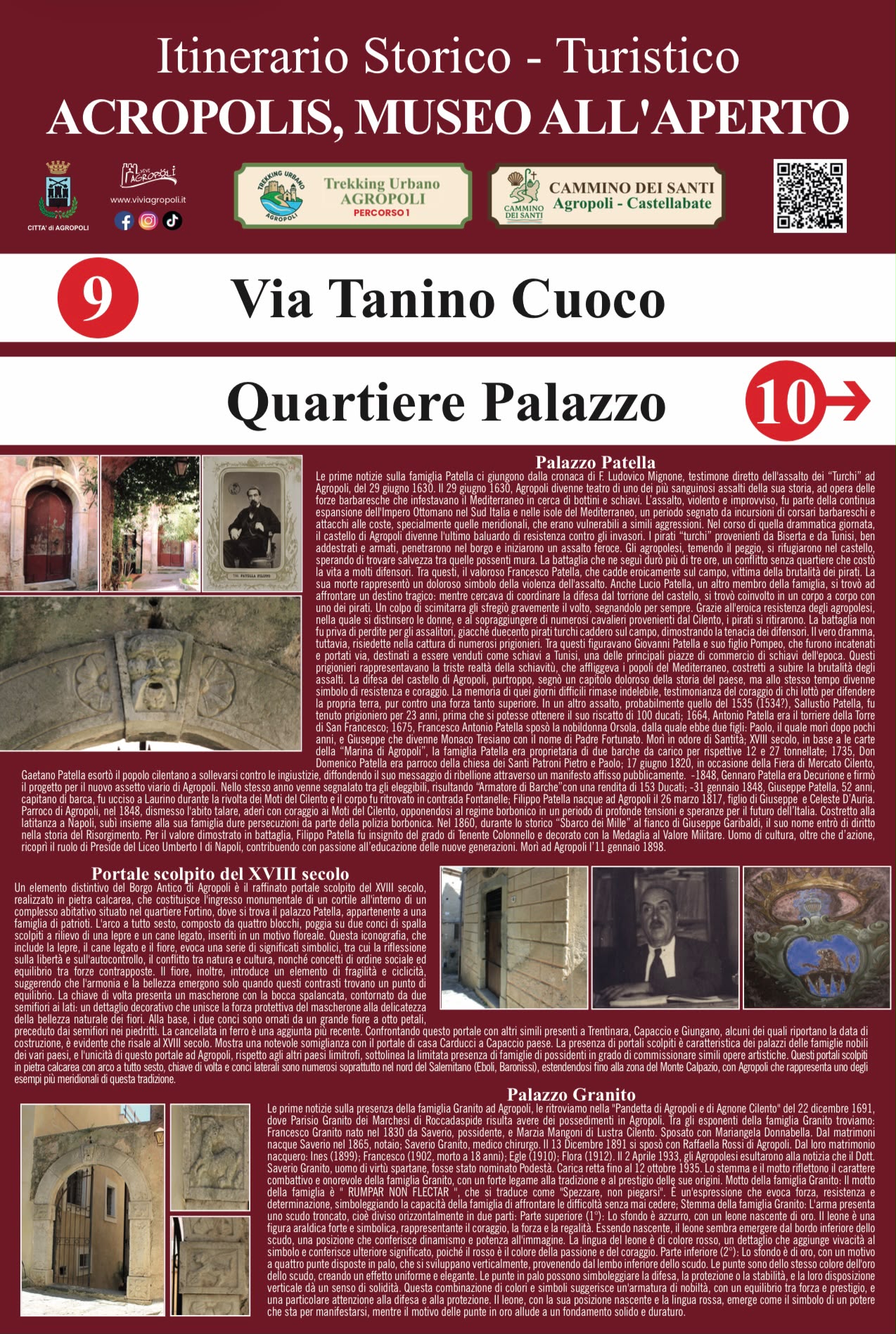
🇬🇧 Palazzo Patella
The first records of the Patella family come from the chronicle of F. Ludovico Mignone, an eyewitness to the “Turkish” assault on Agropoli on June 29, 1630. On that date, Agropoli became the scene of one of the bloodiest attacks in its history, carried out by the Barbary forces that roamed the Mediterranean in search of loot and slaves. The assault, violent and sudden, was part of the ongoing expansion of the Ottoman Empire in southern Italy and the Mediterranean islands—a period marked by Barbary corsair raids and coastal attacks, especially on the southern coasts, which were particularly vulnerable.
During that dramatic day, the castle of Agropoli became the last bastion of resistance against the invaders. The “Turkish” pirates from Bizerte and Tunis, well-trained and armed, entered the town and launched a fierce assault. The Agropoli residents, fearing the worst, took refuge in the castle, hoping to find safety within its sturdy walls. The ensuing battle lasted over three hours, a merciless conflict that claimed the lives of many defenders. Among them was the brave Francesco Patella, who fell heroically on the battlefield, a victim of the pirates’ brutality. His death became a painful symbol of the violence of the attack.
Lucio Patella, another family member, also faced a tragic fate: while trying to coordinate the defense from the castle tower, he was involved in hand-to-hand combat with one of the pirates. A scimitar blow severely scarred his face, marking him forever. Thanks to the heroic resistance of the Agropoli citizens, in which women also distinguished themselves, and to the arrival of numerous knights from the Cilento region, the pirates eventually retreated. The battle was not without losses for the attackers either, as two hundred Turkish pirates fell, demonstrating the defenders’ tenacity.
The real tragedy, however, lay in the capture of numerous prisoners. Among them were Giovanni Patella and his son Pompeo, who were chained and taken away to be sold as slaves in Tunis, one of the major slave-trading centers of the time. These prisoners represented the grim reality of slavery that afflicted the peoples of the Mediterranean, forced to endure the brutality of such raids. The defense of Agropoli Castle, though a painful chapter in the town’s history, became a symbol of resistance and courage. The memory of those difficult days remained indelible, a testament to the bravery of those who fought to defend their land against a vastly superior force.
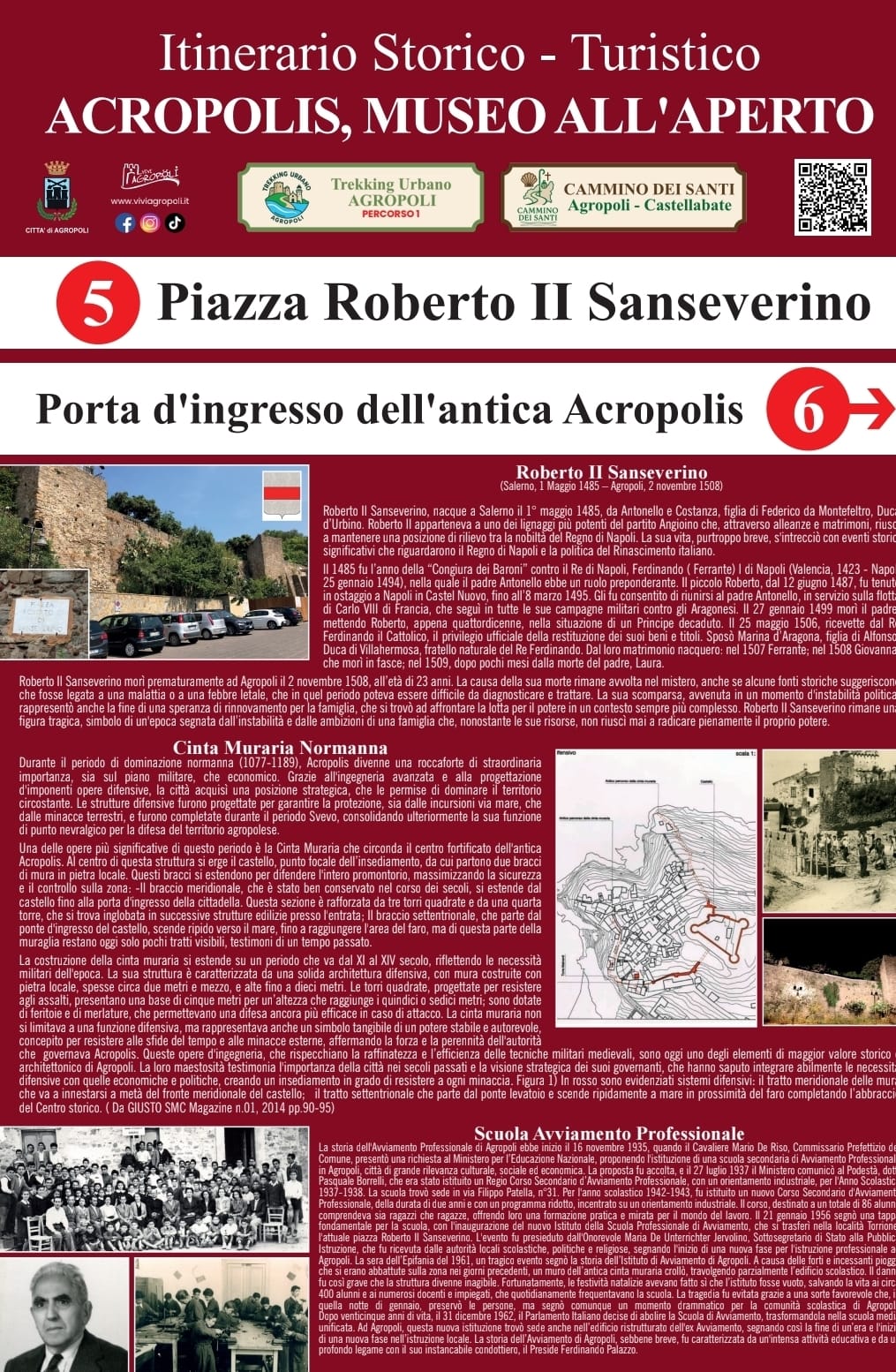
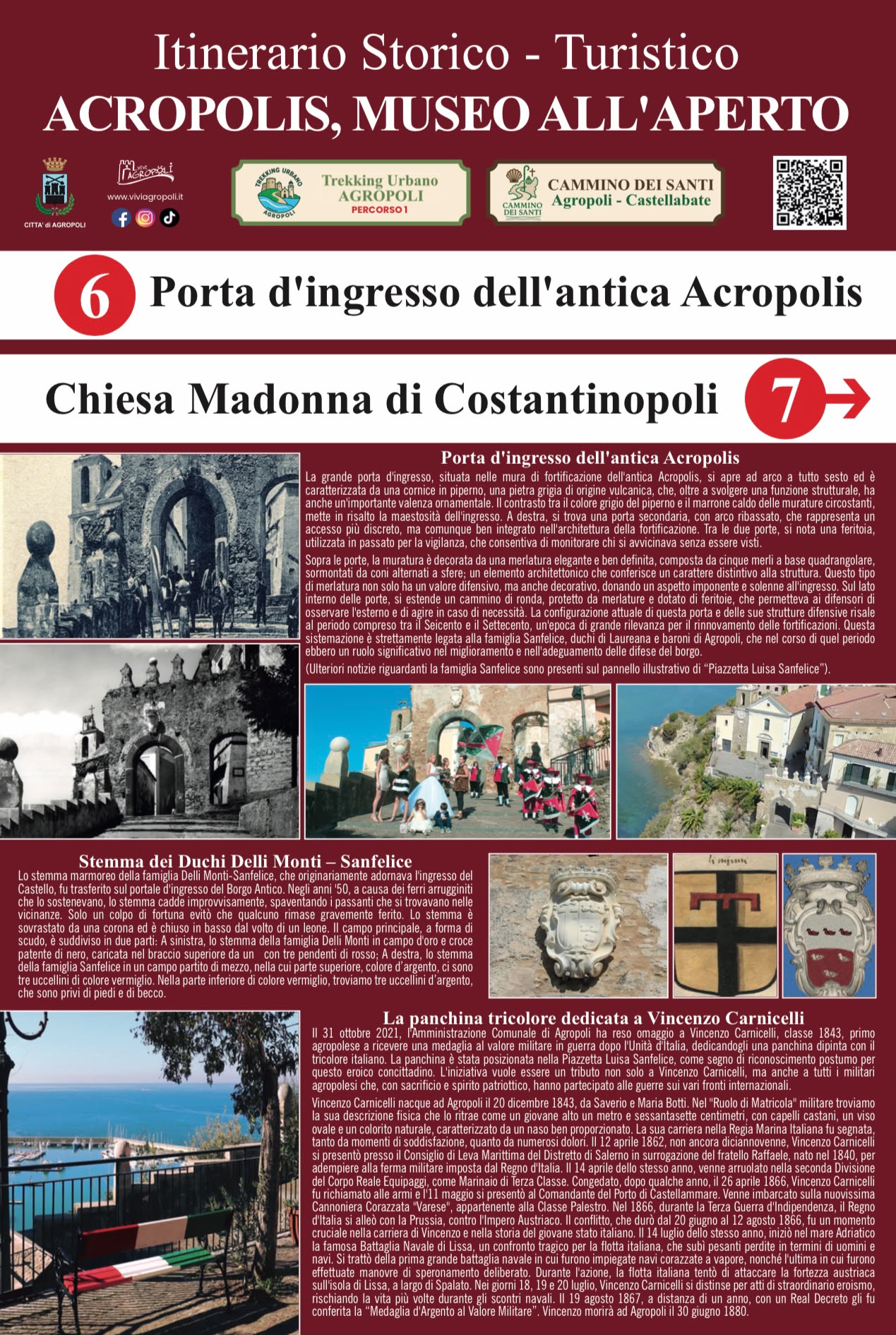
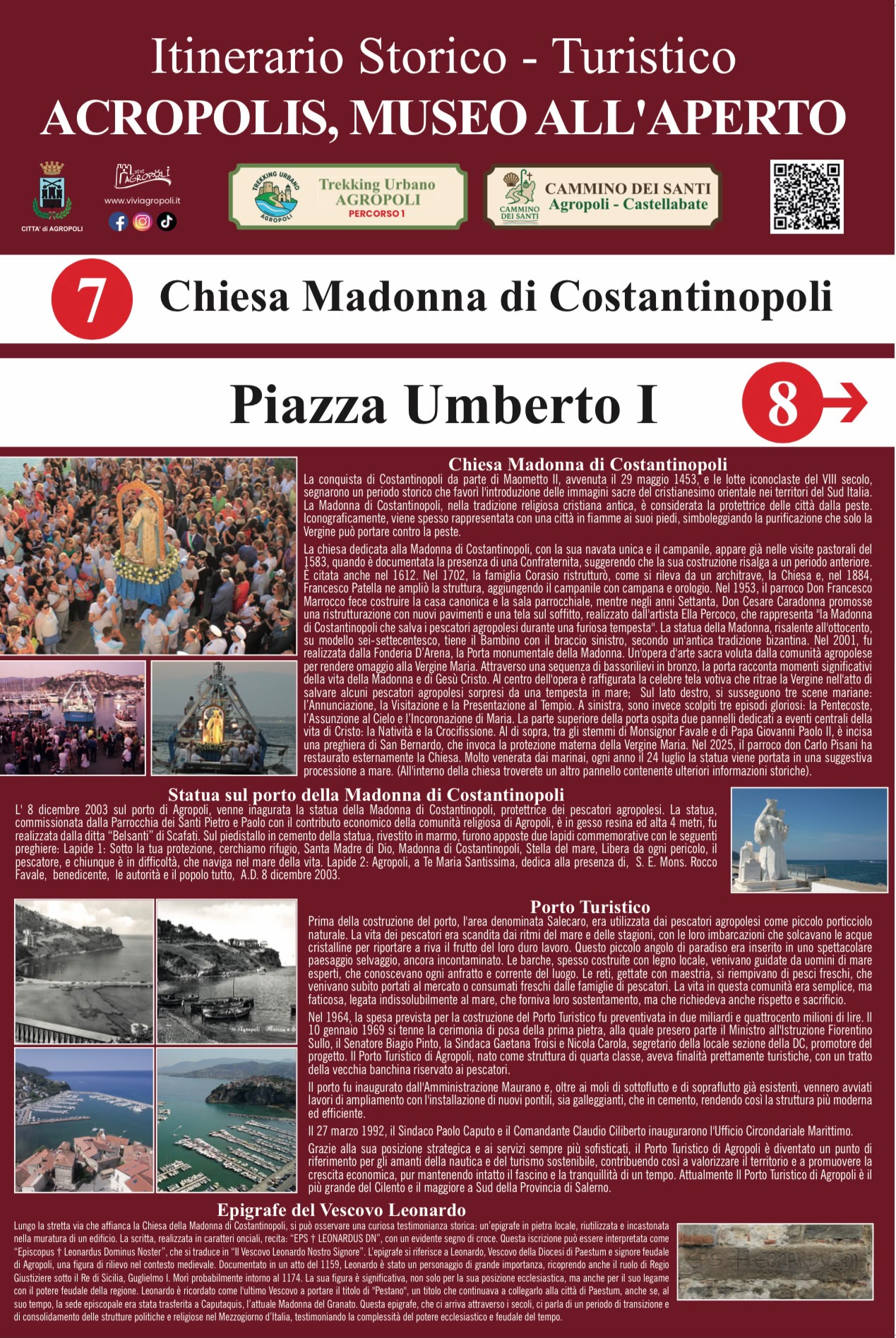
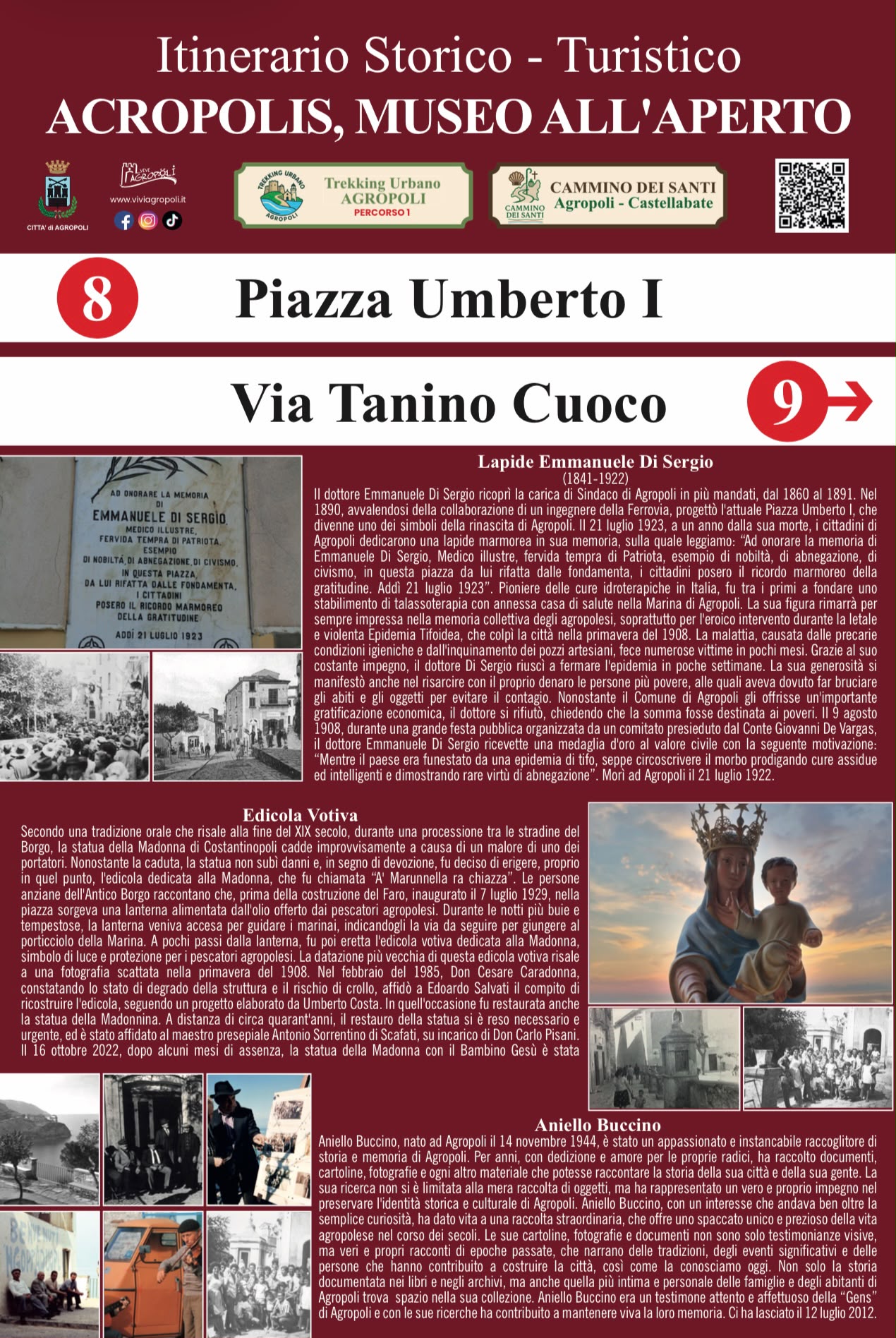
In another attack, likely in 1535 (or 1534?), Sallustio Patella was held prisoner for 23 years before a ransom of 100 ducats could be obtained. In 1664, Antonio Patella was the gatekeeper of the Tower of San Francesco. In 1675, Francesco Antonio Patella married the noblewoman Orsola, with whom he had two children: Paolo, who died young, and Giuseppe, who became a Tresian monk under the name Father Fortunato, and died in the odor of sanctity. In the 18th century, according to the “Marina di Agropoli” records, the Patella family owned two cargo boats of 12 and 27 tons respectively. In 1735, Don Domenico Patella was the parish priest of the church of the patron saints Peter and Paul. On June 17, 1820, during the Cilento Market Fair, Gaetano Patella urged the people of Cilento to rise against injustice, spreading his message of rebellion through a publicly posted manifesto.
By 1848, Gennaro Patella was a councilman and signed the project for the new road layout of Agropoli. In the same year, he was listed among the eligible citizens as a “boat owner” with an income of 153 ducats. On January 31, 1848, Giuseppe Patella, 52, a boat captain, was killed in Laurino during the Cilento Revolts, and his body was found in the Fontanelle district. Filippo Patella was born in Agropoli on March 26, 1817, son of Giuseppe and Celeste D’Auria.
As parish priest of Agropoli in 1848, after leaving the clerical habit, he bravely joined the Cilento Revolts, opposing the Bourbon regime during a period of deep tension and hope for Italy’s future. Forced into hiding in Naples, he and his family suffered severe persecution by the Bourbon police. In 1860, during the historic “Landing of the Thousand” alongside Giuseppe Garibaldi, his name became firmly inscribed in the history of the Risorgimento. For his valor in battle, Filippo Patella was awarded the rank of Lieutenant Colonel and decorated with the Military Valor Medal. A man of culture as well as action, he served as Principal of Liceo Umberto I in Naples, passionately contributing to the education of new generations. He died in Agropoli on January 11, 1898.
18th-Century Carved Portal
A distinctive feature of Agropoli’s Old Town is the elegant 18th-century carved portal made of limestone, marking the monumental entrance to a courtyard within a residential complex in the Fortino district, where Palazzo Patella stands, belonging to a family of patriots. The semicircular arch, composed of four blocks, rests on two carved shoulder stones featuring a hare and a tied dog, set within a floral motif. This iconography, including the hare, tied dog, and flower, evokes symbolic meanings such as reflection on freedom and self-control, the conflict between nature and culture, and concepts of social order and balance between opposing forces. The flower also introduces an element of fragility and cyclicality, suggesting that harmony and beauty emerge only when these contrasts find equilibrium.
The keystone features a grotesque face with an open mouth, flanked by two half-flowers—a decorative detail combining the protective strength of the mask with the delicate beauty of flowers. At the base, the two blocks are adorned with a large eight-petal flower, preceded by half-flowers on the jambs. The iron gate is a more recent addition. Comparing this portal with similar ones in Trentinara, Capaccio, and Giungano, some of which bear construction dates, it is evident that it dates to the 18th century. It shows a strong resemblance to the portal of Casa Carducci in Capaccio. The presence of carved portals is characteristic of noble family residences, and the uniqueness of this portal in Agropoli, compared with neighboring towns, highlights the limited presence of landowning families capable of commissioning such artistic works. These limestone semicircular arched portals, with keystone and lateral blocks, are common especially in northern Salerno (Eboli, Baronissi), extending to the Monte Calpazio area, with Agropoli representing one of the southernmost examples of this tradition.
Palazzo Granito
The first records of the Granito family in Agropoli appear in the Pandetta di Agropoli e di Agnone Cilento dated December 22, 1691, where Parisio Granito of the Marquises of Roccadaspide is listed as owning property in Agropoli. Notable members of the Granito family include: Francesco Granito, born in 1830 to Saverio, a landowner, and Marzia Mangoni of Lustra Cilento. He married Mariangela Donnabella. Their marriage produced Saverio in 1865, a notary; Saverio Granito, a medical surgeon, married Raffaella Rossi of Agropoli on December 13, 1891. Their children were: Ines (1899), Francesco (1902, died at 18), Egle (1910), and Flora (1912). On April 2, 1933, the citizens of Agropoli celebrated the appointment of Dr. Saverio Granito, a man of Spartan virtues, as Podestà, a position he held until October 12, 1935.
The family crest and motto reflect the Granito family’s combative and honorable character, with a strong link to tradition and prestige.
- Motto: “RUMPAR NON FLECTAR”, meaning “Break, do not bend,” symbolizing strength, resilience, and determination—representing the family’s ability to face difficulties without yielding.
- Coat of Arms: The shield is divided horizontally into two parts:
- Upper part: Blue background with a rising golden lion, symbolizing courage, strength, and royalty. The lion appears to emerge from the bottom of the shield, giving a sense of dynamism and power. Its red tongue adds vibrancy, representing passion and bravery.
- Lower part: Gold background with a vertical four-point motif rising from the bottom edge. The points are the same gold as the shield, creating an elegant and uniform effect. The vertical points may symbolize defense, protection, or stability. This combination of symbols suggests noble armor, balancing strength and prestige, with attention to protection. The rising lion with the red tongue represents emerging power, while the golden points allude to a solid and lasting foundation.
🇩🇪 Palazzo Patella
Die ersten Aufzeichnungen über die Familie Patella stammen aus der Chronik von F. Ludovico Mignone, einem Augenzeugen des „türkischen“ Angriffs auf Agropoli am 29. Juni 1630. An diesem Tag wurde Agropoli Schauplatz eines der blutigsten Angriffe seiner Geschichte, durchgeführt von den Barbareskenkräften, die das Mittelmeer nach Beute und Sklaven durchstreiften. Der Angriff, gewaltsam und plötzlich, war Teil der fortlaufenden Expansion des Osmanischen Reiches in Süditalien und auf den Mittelmeerinseln – eine Zeit, die von Barbareskenüberfällen und Küstenangriffen geprägt war, insbesondere an den südlichen Küsten, die besonders verwundbar waren.
Während dieses dramatischen Tages wurde die Burg von Agropoli zum letzten Bollwerk des Widerstands gegen die Eindringlinge. Die „türkischen“ Piraten aus Bizerte und Tunis, gut ausgebildet und bewaffnet, drangen in die Stadt ein und begannen einen heftigen Angriff. Die Einwohner Agropolis, vom Schlimmsten bedroht, suchten Zuflucht in der Burg und hofften, innerhalb ihrer massiven Mauern Sicherheit zu finden. Die darauf folgende Schlacht dauerte über drei Stunden, ein erbarmungsloser Konflikt, der vielen Verteidigern das Leben kostete. Unter ihnen war der mutige Francesco Patella, der heroisch auf dem Schlachtfeld fiel, ein Opfer der Brutalität der Piraten. Sein Tod wurde zu einem schmerzhaften Symbol für die Gewalt des Angriffs.
Lucio Patella, ein weiteres Mitglied der Familie, erlebte ebenfalls ein tragisches Schicksal: Während er versuchte, die Verteidigung vom Burgturm aus zu koordinieren, geriet er in einen Nahkampf mit einem der Piraten. Ein Säbelhieb entstellte sein Gesicht schwer und zeichnete ihn für immer. Dank des heldenhaften Widerstands der Einwohner Agropolis, an dem sich auch Frauen auszeichneten, und dem Eintreffen zahlreicher Ritter aus der Region Cilento, zogen sich die Piraten schließlich zurück. Auch die Angreifer erlitten Verluste, da zweihundert türkische Piraten fielen und die Zähigkeit der Verteidiger demonstrierten.
Die wahre Tragödie lag jedoch in der Gefangennahme zahlreicher Personen. Unter ihnen waren Giovanni Patella und sein Sohn Pompeo, die gefesselt weggebracht wurden, um als Sklaven in Tunis verkauft zu werden, einem der wichtigsten Sklavenhandelszentren der Zeit. Diese Gefangenen spiegelten die harte Realität der Sklaverei wider, die die Völker des Mittelmeers heimsuchte, gezwungen, die Brutalität solcher Angriffe zu erleiden. Die Verteidigung der Burg von Agropoli war zwar ein schmerzlicher Abschnitt in der Geschichte der Stadt, wurde aber zugleich zu einem Symbol des Widerstands und Mutes. Die Erinnerung an diese schwierigen Tage blieb unvergesslich, ein Zeugnis für den Mut derjenigen, die ihre Heimat trotz der überlegenen Streitmacht verteidigten.
Bei einem anderen Angriff, wahrscheinlich 1535 (oder 1534?), wurde Sallustio Patella 23 Jahre lang gefangen gehalten, bevor ein Lösegeld von 100 Dukaten gezahlt werden konnte. 1664 war Antonio Patella Torwächter des Turms von San Francesco. 1675 heiratete Francesco Antonio Patella die Adelige Orsola, mit der er zwei Kinder hatte: Paolo, der früh starb, und Giuseppe, der Mönch des Tresianerordens wurde unter dem Namen Pater Fortunato und im Ruf der Heiligkeit starb.
Im 18. Jahrhundert besaß die Familie Patella laut den Aufzeichnungen der „Marina di Agropoli“ zwei Frachtschiffe mit 12 und 27 Tonnen Kapazität. 1735 war Don Domenico Patella Pfarrer der Kirche der Schutzpatrone Petrus und Paulus. Am 17. Juni 1820 rief Gaetano Patella während der Cilento-Messe die Bevölkerung auf, sich gegen Ungerechtigkeiten zu erheben, und verbreitete seine Botschaft des Aufstands durch ein öffentlich ausgehängtes Plakat.
1848 war Gennaro Patella Stadtrat und unterzeichnete das Projekt für die neue Straßenführung von Agropoli. Im selben Jahr wurde er als „Bootsbesitzer“ mit einem Einkommen von 153 Dukaten gelistet. Am 31. Januar 1848 wurde Giuseppe Patella, 52 Jahre alt, Bootskapitän, während der Aufstände von Cilento in Laurino getötet, und sein Körper wurde im Gebiet Fontanelle gefunden. Filippo Patella wurde am 26. März 1817 in Agropoli als Sohn von Giuseppe und Celeste D’Auria geboren.
Als Pfarrer von Agropoli 1848, nachdem er die geistliche Kleidung abgelegt hatte, schloss er sich mutig den Aufständen von Cilento an und widersetzte sich dem bourbonischen Regime in einer Zeit tiefgreifender Spannungen und Hoffnungen für die Zukunft Italiens. Nach der Flucht nach Neapel erlitt er zusammen mit seiner Familie schwere Verfolgungen durch die bourbonische Polizei. 1860, während der historischen „Landung der Tausend“ an der Seite von Giuseppe Garibaldi, wurde sein Name fest in die Geschichte des Risorgimento eingeschrieben. Für seine Tapferkeit in der Schlacht wurde Filippo Patella zum Oberstleutnant ernannt und mit der Militärverdienstmedaille ausgezeichnet. Ein Mann von Kultur und Tatkraft, war er Schulleiter des Liceo Umberto I in Neapel und trug leidenschaftlich zur Bildung der neuen Generationen bei. Er starb am 11. Januar 1898 in Agropoli.
- Jahrhundert geschnitztes Portal
Ein besonderes Merkmal der Altstadt von Agropoli ist das elegante, im 18. Jahrhundert gefertigte Portal aus Kalkstein, das den monumentalen Eingang zu einem Innenhof innerhalb eines Wohnkomplexes im Stadtteil Fortino markiert, wo sich der Palazzo Patella befindet, der einer Familie von Patrioten gehört. Der Rundbogen, bestehend aus vier Blöcken, ruht auf zwei geschmückten Seitenteilen, die einen Hasen und einen angeleinten Hund in ein florales Motiv eingearbeitet zeigen. Diese Ikonografie, einschließlich des Hasen, des angeleinten Hundes und der Blume, ruft symbolische Bedeutungen hervor, wie Reflexion über Freiheit und Selbstkontrolle, den Konflikt zwischen Natur und Kultur sowie Konzepte von sozialer Ordnung und Gleichgewicht zwischen gegensätzlichen Kräften. Die Blume führt außerdem ein Element von Zerbrechlichkeit und Zyklizität ein, das darauf hinweist, dass Harmonie und Schönheit nur entstehen, wenn diese Gegensätze ein Gleichgewicht finden.
Der Schlussstein zeigt ein groteskes Gesicht mit offenem Mund, flankiert von zwei Halbbloemen – ein dekoratives Detail, das die schützende Kraft der Maske mit der zarten Schönheit der Blumen verbindet. An der Basis sind die beiden Blöcke mit einer großen achtblättrigen Blume verziert, der Halbblumen an den Pfosten vorausgehen. Das Eisentor ist eine spätere Ergänzung. Vergleicht man dieses Portal mit ähnlichen in Trentinara, Capaccio und Giungano, von denen einige das Baujahr tragen, ist ersichtlich, dass es aus dem 18. Jahrhundert stammt. Es zeigt eine starke Ähnlichkeit mit dem Portal des Hauses Carducci in Capaccio. Das Vorhandensein geschnitzter Portale ist typisch für adlige Familienhäuser, und die Einzigartigkeit dieses Portals in Agropoli im Vergleich zu den Nachbarstädten unterstreicht die begrenzte Präsenz wohlhabender Familien, die in der Lage waren, solche künstlerischen Werke in Auftrag zu geben. Diese Kalkstein-Portale mit Rundbogen, Schlussstein und Seitenblöcken sind besonders im Norden der Provinz Salerno (Eboli, Baronissi) verbreitet und erstrecken sich bis zum Monte Calpazio, wobei Agropoli eines der südlichsten Beispiele dieser Tradition darstellt.
Palazzo Granito
Die ersten Aufzeichnungen über die Familie Granito in Agropoli finden sich in der „Pandetta di Agropoli e di Agnone Cilento“ vom 22. Dezember 1691, in der Parisio Granito von den Markgrafen von Roccadaspide als Eigentümer von Besitzungen in Agropoli aufgeführt ist. Bedeutende Mitglieder der Familie Granito sind: Francesco Granito, geboren 1830 als Sohn von Saverio, einem Grundbesitzer, und Marzia Mangoni aus Lustra Cilento. Er heiratete Mariangela Donnabella. Aus ihrer Ehe ging Saverio (1865), Notar, hervor; Saverio Granito, Chirurg, heiratete am 13. Dezember 1891 Raffaella Rossi aus Agropoli. Ihre Kinder waren: Ines (1899), Francesco (1902, starb mit 18), Egle (1910) und Flora (1912). Am 2. April 1933 feierten die Bürger von Agropoli die Ernennung von Dr. Saverio Granito, einem Mann mit spartanischen Tugenden, zum Podestà, ein Amt, das er bis zum 12. Oktober 1935 innehatte.
Das Familienwappen und Motto spiegeln den kämpferischen und ehrenhaften Charakter der Familie Granito wider, mit starker Bindung an Tradition und Prestige.
- Motto: „RUMPAR NON FLECTAR“, bedeutet „Brechen, nicht beugen“ und symbolisiert Stärke, Widerstandskraft und Entschlossenheit – die Fähigkeit der Familie, Schwierigkeiten standzuhalten, ohne nachzugeben.
- Wappen: Das Schild ist horizontal geteilt:
- Oberer Teil: Blauer Hintergrund mit einem aufsteigenden goldenen Löwen, Symbol für Mut, Kraft und Königtum. Der Löwe erscheint, als würde er aus dem unteren Rand des Schildes emporsteigen, was Dynamik und Kraft vermittelt. Seine rote Zunge verleiht Lebendigkeit und steht für Leidenschaft und Tapferkeit.
- Unterer Teil: Goldener Hintergrund mit einem vertikalen Motiv aus vier Spitzen, die vom unteren Rand des Schildes aufsteigen. Die Spitzen haben dieselbe goldene Farbe wie das Schild, was einen eleganten, einheitlichen Eindruck erzeugt. Die vertikale Anordnung der Spitzen kann Verteidigung, Schutz oder Stabilität symbolisieren. Diese Kombination von Farben und Symbolen deutet auf adelige Rüstung hin, ein Gleichgewicht zwischen Stärke und Prestige, mit besonderem Augenmerk auf Schutz. Der aufsteigende Löwe mit roter Zunge repräsentiert aufkommende Macht, während die goldenen Spitzen auf ein solides und dauerhaftes Fundament hinweisen.
🇫🇷 Palazzo Patella
Les premières mentions de la famille Patella nous viennent de la chronique de F. Ludovico Mignone, témoin direct de l’assaut des « Turcs » sur Agropoli le 29 juin 1630. Ce jour-là, Agropoli fut le théâtre de l’un des assauts les plus sanglants de son histoire, perpétré par les forces barbaresques qui parcouraient la Méditerranée à la recherche de butin et d’esclaves. L’attaque, violente et soudaine, faisait partie de l’expansion continue de l’Empire ottoman dans le sud de l’Italie et sur les îles méditerranéennes – une période marquée par les raids des corsaires barbaresques et les attaques sur les côtes, en particulier les côtes méridionales, particulièrement vulnérables.
Pendant cette journée dramatique, le château d’Agropoli devint le dernier bastion de résistance contre les envahisseurs. Les pirates « turcs » venus de Bizerte et de Tunis, bien entraînés et armés, pénétrèrent dans le village et lancèrent un assaut féroce. Les habitants d’Agropoli, craignant le pire, se réfugièrent dans le château, espérant trouver sécurité derrière ses murs imposants. La bataille qui s’ensuivit dura plus de trois heures, un conflit sans merci qui coûta la vie à de nombreux défenseurs. Parmi eux se trouvait le vaillant Francesco Patella, qui tomba héroïquement au combat, victime de la brutalité des pirates. Sa mort devint un symbole douloureux de la violence de l’assaut.
Lucio Patella, un autre membre de la famille, connut également un destin tragique : en essayant de coordonner la défense depuis le donjon du château, il fut engagé dans un combat rapproché avec l’un des pirates. Un coup de sabre lui défigura gravement le visage, le marquant à jamais. Grâce à la résistance héroïque des habitants d’Agropoli, à laquelle participèrent également des femmes, et à l’arrivée de nombreux chevaliers venus du Cilento, les pirates finirent par se retirer. Les assaillants subirent eux aussi des pertes, car deux cents pirates turcs tombèrent au combat, montrant la ténacité des défenseurs.
La véritable tragédie résida toutefois dans la capture de nombreux prisonniers. Parmi eux se trouvaient Giovanni Patella et son fils Pompeo, enchaînés et emmenés pour être vendus comme esclaves à Tunis, l’une des principales places commerciales d’esclaves de l’époque. Ces prisonniers représentaient la dure réalité de l’esclavage, qui frappait les peuples méditerranéens, contraints de subir la brutalité des raids. La défense du château d’Agropoli marqua un chapitre douloureux de l’histoire de la ville, mais devint en même temps un symbole de courage et de résistance. La mémoire de ces jours difficiles resta indélébile, témoignage du courage de ceux qui luttèrent pour défendre leur terre, malgré une force largement supérieure.
Lors d’un autre assaut, probablement en 1535 (ou 1534 ?), Sallustio Patella fut prisonnier pendant 23 ans avant que sa rançon de 100 ducats ne soit payée. En 1664, Antonio Patella était le gardien de la tour de San Francesco. En 1675, Francesco Antonio Patella épousa l’aristocrate Orsola, avec laquelle il eut deux enfants : Paolo, mort jeune, et Giuseppe, qui devint moine trésien sous le nom de Père Fortunato et mourut en odeur de sainteté.
Au XVIIIe siècle, selon les documents de la « Marina di Agropoli », la famille Patella possédait deux bateaux de charge de 12 et 27 tonnes respectivement. En 1735, Don Domenico Patella était curé de l’église des Saints Patrons Pierre et Paul. Le 17 juin 1820, lors de la foire de marché du Cilento, Gaetano Patella exhorta le peuple cilentain à se soulever contre les injustices, diffusant son message de rébellion à travers une affiche publique.
En 1848, Gennaro Patella était conseiller municipal et signa le projet pour la nouvelle organisation des voies d’Agropoli. La même année, il fut mentionné parmi les éligibles, avec la mention « Armateur de bateaux » et un revenu de 153 ducats. Le 31 janvier 1848, Giuseppe Patella, 52 ans, capitaine de bateau, fut tué à Laurino lors des soulèvements du Cilento, et son corps fut retrouvé à Fontanelle. Filippo Patella naquit le 26 mars 1817 à Agropoli, fils de Giuseppe et Celeste D’Auria.
En tant que curé d’Agropoli en 1848, après avoir renoncé à l’habit ecclésiastique, il rejoignit courageusement les mouvements du Cilento, s’opposant au régime bourbonien à une époque de profondes tensions et d’espoirs pour l’avenir de l’Italie. Contraint à la clandestinité à Naples, lui et sa famille subirent de sévères persécutions de la part de la police bourbonienne. En 1860, lors du célèbre « Débarquement des Mille » aux côtés de Giuseppe Garibaldi, son nom entra définitivement dans l’histoire du Risorgimento. Pour sa bravoure au combat, Filippo Patella fut nommé lieutenant-colonel et décoré de la Médaille militaire. Homme de culture et d’action, il occupa le poste de directeur du Liceo Umberto I à Naples, contribuant avec passion à l’éducation des nouvelles générations. Il mourut à Agropoli le 11 janvier 1898.
Portail sculpté du XVIIIe siècle
Un élément distinctif du Borgo Antico d’Agropoli est le portail sculpté raffiné du XVIIIe siècle en pierre calcaire, qui constitue l’entrée monumentale d’une cour à l’intérieur d’un complexe résidentiel situé dans le quartier Fortino, où se trouve le Palazzo Patella, appartenant à une famille de patriotes. L’arc en plein cintre, composé de quatre blocs, repose sur deux linteaux sculptés en relief représentant un lièvre et un chien attaché, intégrés dans un motif floral. Cette iconographie, incluant le lièvre, le chien attaché et la fleur, évoque une série de significations symboliques, telles que la réflexion sur la liberté et le contrôle de soi, le conflit entre nature et culture, ainsi que des concepts d’ordre social et d’équilibre entre forces opposées. La fleur introduit également un élément de fragilité et de cyclicité, suggérant que l’harmonie et la beauté émergent seulement lorsque ces contrastes trouvent un équilibre.
Le claveau central présente un masque grotesque à la bouche ouverte, entouré de deux demi-fleurs sur les côtés – un détail décoratif qui combine la force protectrice du masque avec la délicatesse de la beauté naturelle des fleurs. À la base, les deux blocs sont ornés d’une grande fleur à huit pétales, précédée de demi-fleurs sur les piédroits. La grille en fer est un ajout plus récent. Comparé à d’autres portails similaires à Trentinara, Capaccio et Giungano, dont certains portent la date de construction, il est évident que ce portail date du XVIIIe siècle. Il présente une grande ressemblance avec le portail de la maison Carducci à Capaccio. La présence de portails sculptés est caractéristique des palais des familles nobles, et l’unicité de ce portail à Agropoli, par rapport aux autres villes voisines, souligne la présence limitée de familles fortunées capables de commander de telles œuvres artistiques. Ces portails en pierre calcaire avec arc en plein cintre, clé de voûte et blocs latéraux sont nombreux surtout dans le nord de la province de Salerne (Eboli, Baronissi), s’étendant jusqu’à la région du Monte Calpazio, Agropoli représentant l’un des exemples les plus méridionaux de cette tradition.
Palazzo Granito
Les premières mentions de la famille Granito à Agropoli se trouvent dans la « Pandetta di Agropoli e di Agnone Cilento » du 22 décembre 1691, où Parisio Granito, des marquis de Roccadaspide, est enregistré comme possédant des biens à Agropoli. Parmi les membres notables de la famille Granito : Francesco Granito, né en 1830 de Saverio, propriétaire terrien, et Marzia Mangoni de Lustra Cilento. Il épousa Mariangela Donnabella. De leur mariage naquit Saverio (1865), notaire ; Saverio Granito, médecin chirurgien, épousa le 13 décembre 1891 Raffaella Rossi d’Agropoli. Leurs enfants : Ines (1899), Francesco (1902, mort à 18 ans), Egle (1910), Flora (1912). Le 2 avril 1933, les habitants d’Agropoli célébrèrent la nomination du Dr Saverio Granito, homme de vertus spartiate, comme Podestà, fonction qu’il occupa jusqu’au 12 octobre 1935.
Le blason et la devise reflètent le caractère combatif et honorable de la famille Granito, avec un fort lien à la tradition et au prestige de ses origines.
- Devise : « RUMPAR NON FLECTAR », signifie « Briser, ne pas se plier », évoquant la force, la résistance et la détermination – la capacité de la famille à faire face aux difficultés sans jamais céder.
- Blason : Le bouclier est divisé horizontalement :
- Partie supérieure : Fond bleu avec un lion d’or levant, symbole de courage, de force et de royauté. Le lion semble émerger du bord inférieur du bouclier, donnant dynamisme et puissance. Sa langue rouge ajoute de la vivacité et symbolise la passion et le courage.
- Partie inférieure : Fond doré avec un motif de quatre pointes verticales émergeant du bas du bouclier. Les pointes dorées créent un effet uniforme et élégant. La disposition verticale évoque défense, protection et stabilité. La combinaison de couleurs et de symboles suggère une armure de noblesse, un équilibre entre force et prestige, et un soin particulier pour la protection. Le lion levant à la langue rouge représente un pouvoir en émergence, tandis que les pointes dorées indiquent une base solide et durable.