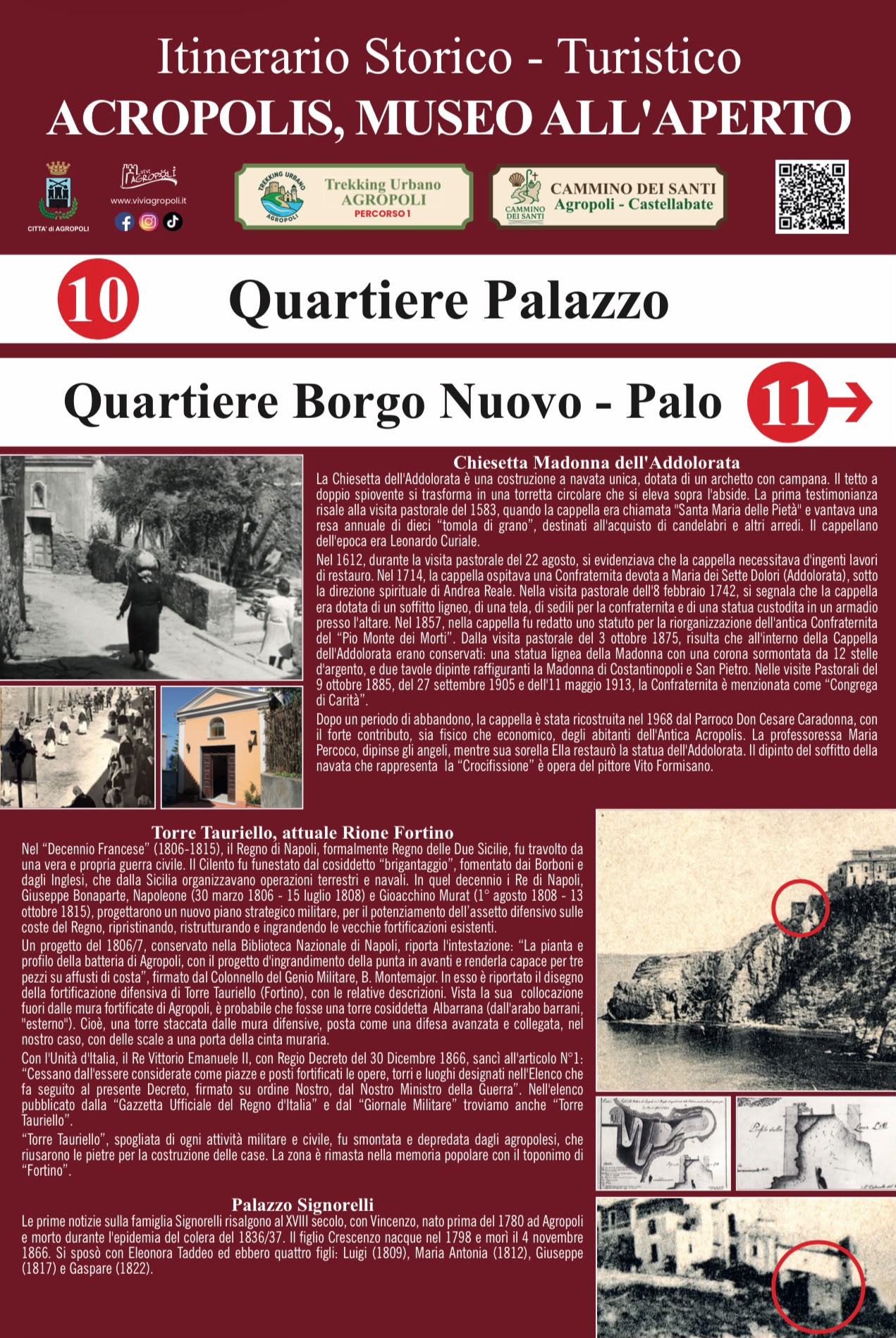
🇬🇧 Chiesetta Madonna dell’Addolorata
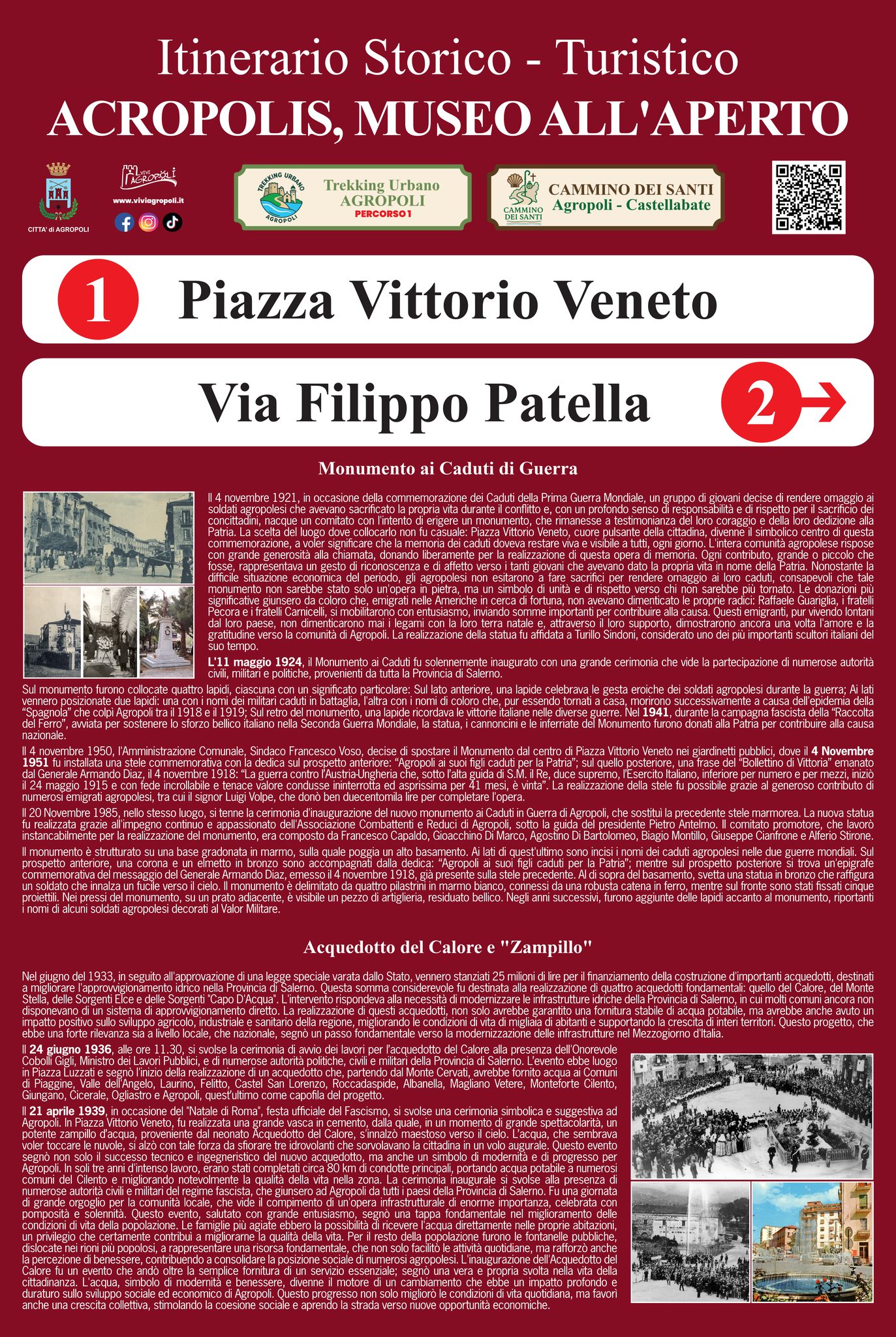
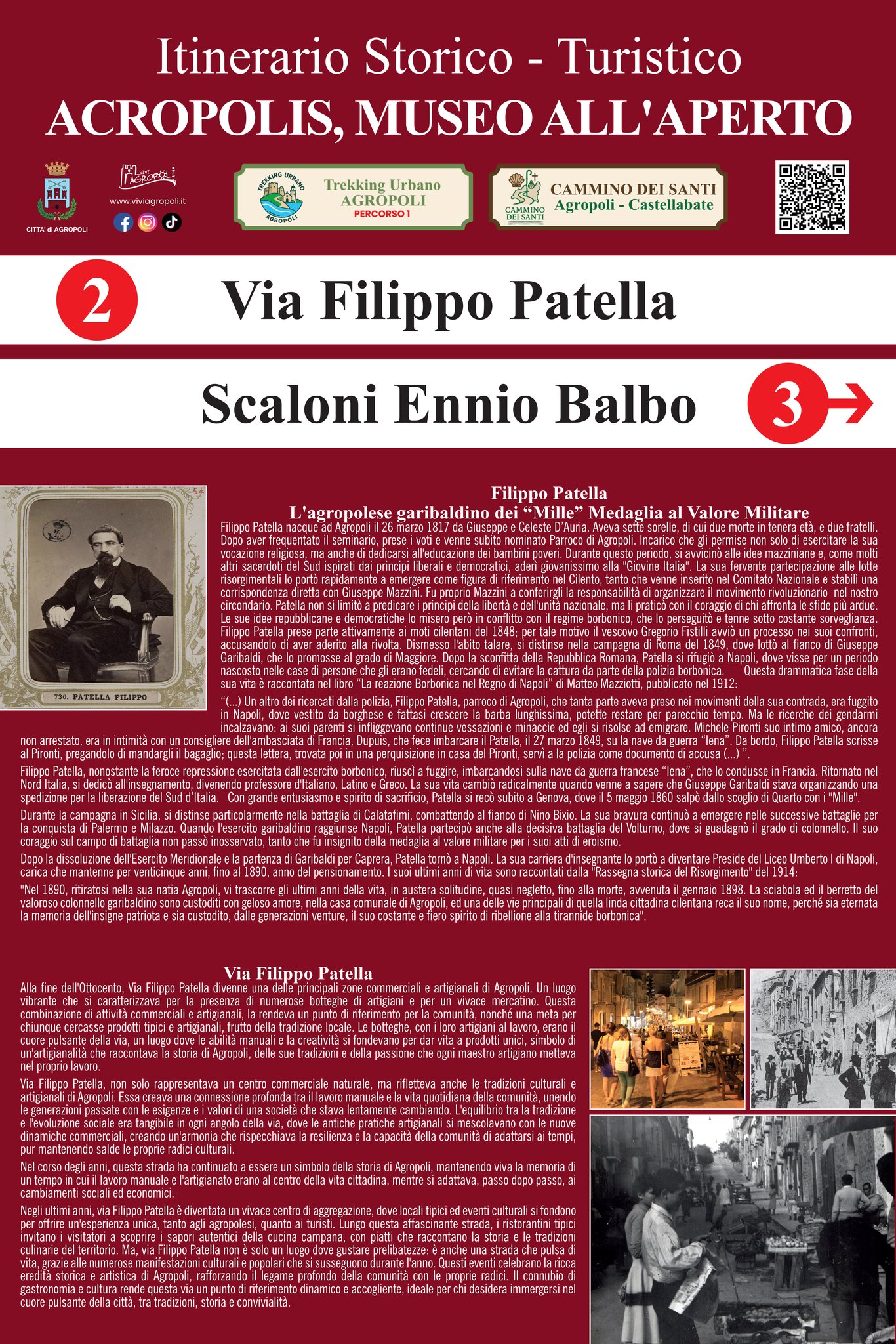
The Chiesetta dell’Addolorata is a single-nave building, equipped with a small arch and bell. Its gabled roof transitions into a circular turret that rises above the apse. The first recorded mention dates back to the pastoral visit of 1583, when the chapel was called “Santa Maria delle Pietà” and had an annual yield of ten tomola of wheat, intended for the purchase of candlesticks and other furnishings. The chaplain at the time was Leonardo Curiale.
In 1612, during the pastoral visit on August 22, it was noted that the chapel required extensive restoration work. By 1714, the chapel hosted a Confraternity devoted to Mary of the Seven Sorrows (Addolorata), under the spiritual direction of Andrea Reale. The pastoral visit of February 8, 1742, reports that the chapel was equipped with a wooden ceiling, a painting, seats for the confraternity, and a statue kept in a cabinet near the altar.
In 1857, a statute was drawn up for the reorganization of the old Confraternity of the “Pio Monte dei Morti” within the chapel. From the pastoral visit of October 3, 1875, it is recorded that inside the Cappella dell’Addolorata were preserved: a wooden statue of the Madonna with a crown surmounted by 12 silver stars, and two painted panels depicting the Madonna of Constantinople and Saint Peter. In the pastoral visits of October 9, 1885, September 27, 1905, and May 11, 1913, the Confraternity is mentioned as the “Congrega di Carità.”
After a period of abandonment, the chapel was rebuilt in 1968 by the parish priest Don Cesare Caradonna, with significant physical and financial contributions from the inhabitants of the Antica Acropolis. Professor Maria Percoco painted the angels, while her sister Ella restored the statue of the Addolorata. The ceiling painting of the nave depicting the “Crucifixion” is the work of the painter Vito Formisano.
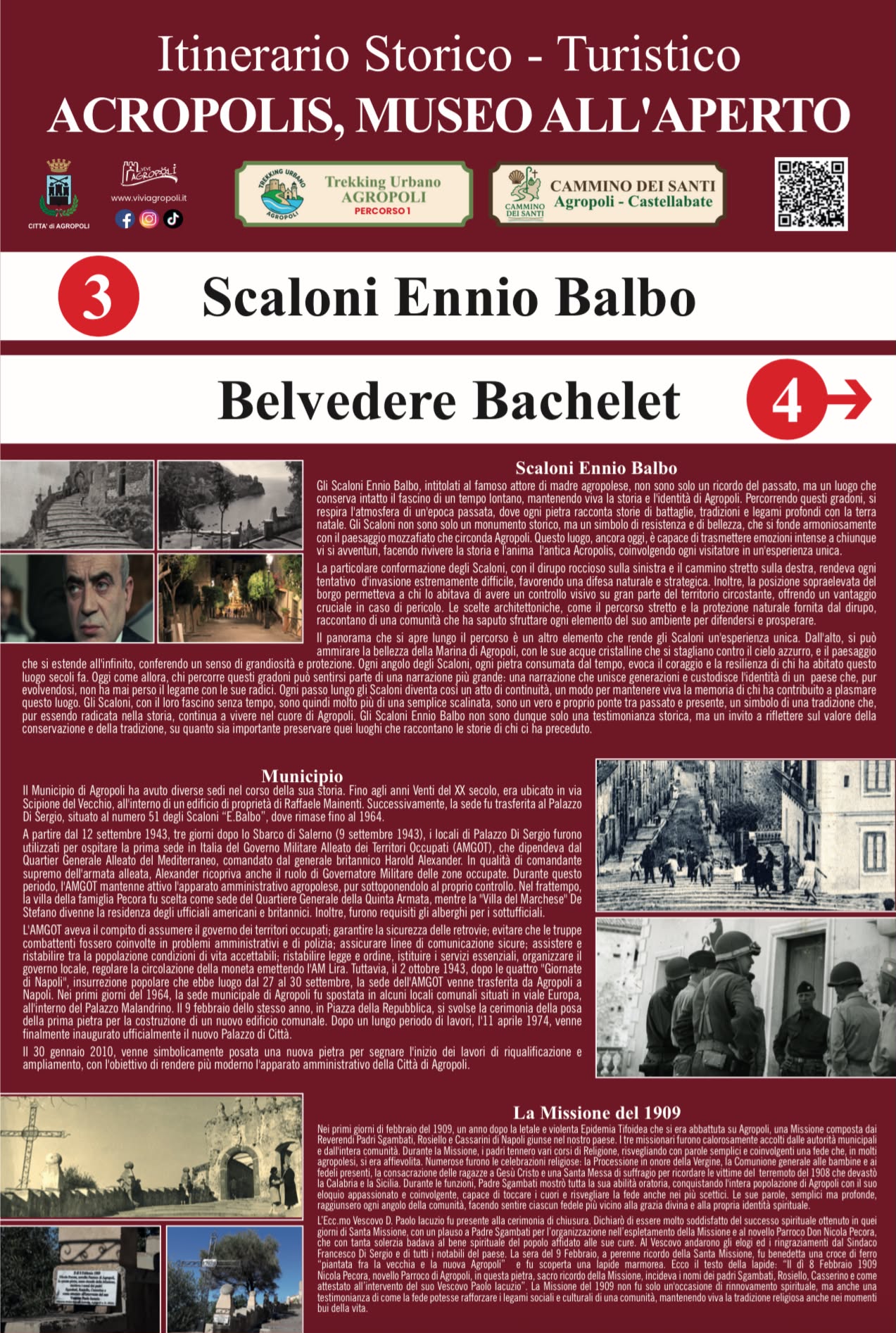
Torre Tauriello, present-day Rione Fortino
During the “French Decade” (1806–1815), the Kingdom of Naples, formally the Kingdom of the Two Sicilies, was swept up in a full-scale civil war. The Cilento region suffered from so-called “brigandage,” fueled by the Bourbons and the British, who organized land and naval operations from Sicily. During that decade, the Kings of Naples—Joseph Bonaparte, Napoleon (March 30, 1806 – July 15, 1808), and Joachim Murat (August 1, 1808 – October 13, 1815)—planned a new strategic military scheme to strengthen coastal defenses, restoring, restructuring, and expanding existing fortifications.
A project from 1806/07, preserved in the National Library of Naples, is titled: “Plan and profile of the Agropoli battery, with a project to extend the forward point and make it capable of housing three coastal artillery pieces on carriages”, signed by Colonel B. Montemajor of the Military Engineering Corps. It includes the design of the defensive fortification of Torre Tauriello (Fortino) with corresponding descriptions. Given its location outside the fortified walls of Agropoli, it was likely an Albarrana tower (from Arabic barrani, “external”)—a tower detached from the defensive walls, placed as an advanced defense and connected, in this case, via stairs to a gate in the wall.
With the Unification of Italy, King Victor Emmanuel II, through the Royal Decree of December 30, 1866, stated in Article 1: “The works, towers, and locations listed in the following schedule shall cease to be considered as fortified places and positions.” Torre Tauriello appears on this list, published in the Official Gazette of the Kingdom of Italy and the Giornale Militare.
“Torre Tauriello,” stripped of all military and civil functions, was dismantled and plundered by the people of Agropoli, who reused the stones for building houses. The area remains known in popular memory as “Fortino.”
Quartiere Palazzo
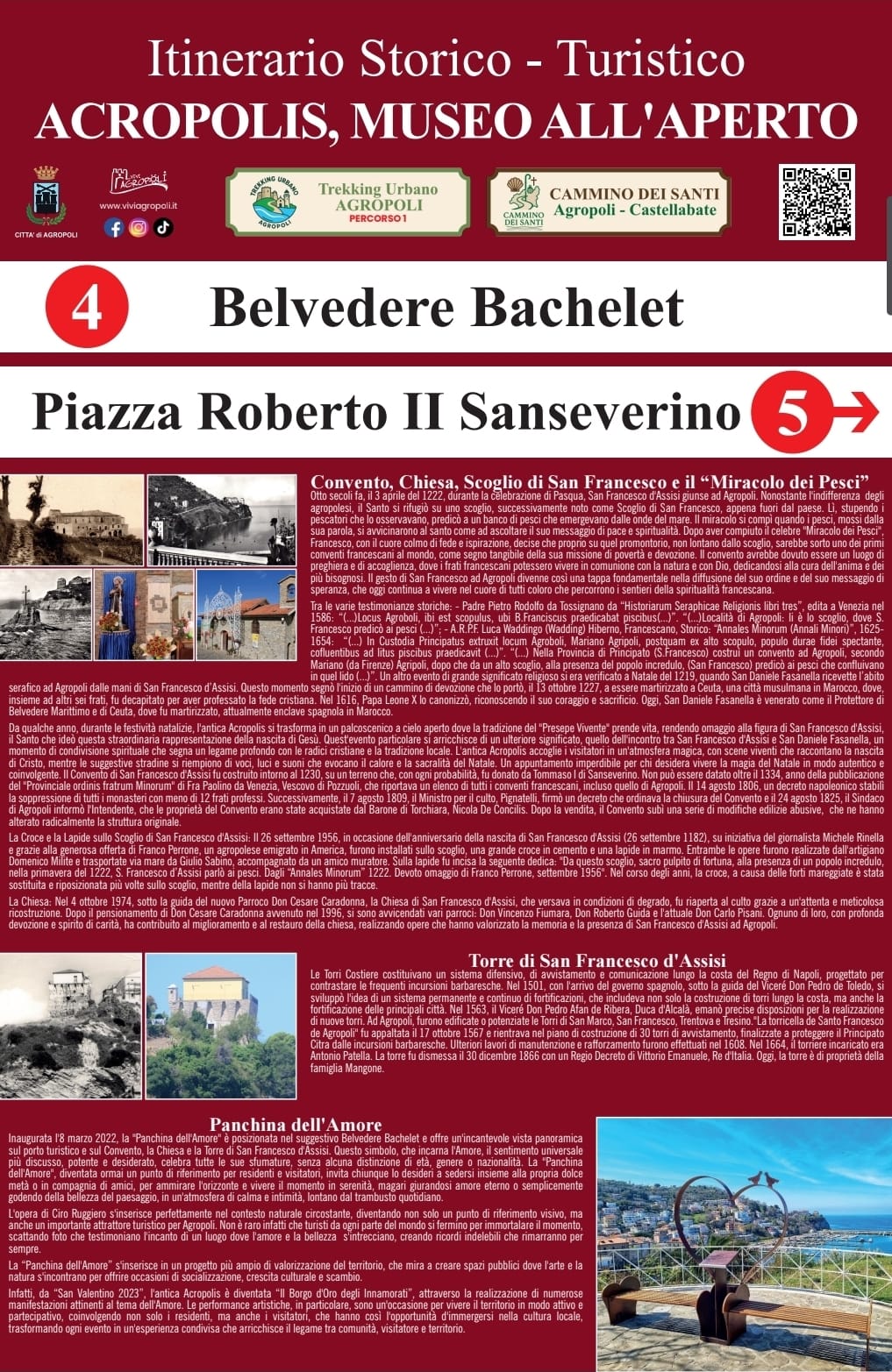
Palazzo Signorelli
The first records of the Signorelli family date back to the 18th century, with Vincenzo, born before 1780 in Agropoli and who died during the cholera epidemic of 1836/37. His son Crescenzo was born in 1798 and died on November 4, 1866. He married Eleonora Taddeo, and they had four children: Luigi (1809), Maria Antonia (1812), Giuseppe (1817), and Gaspare (1822).
🇩🇪 Chiesetta Madonna dell’Addolorata
Die Chiesetta dell’Addolorata ist ein einschiffiges Gebäude mit einem kleinen Bogen und einer Glocke. Das Satteldach geht in einen runden Turm über, der über der Apsis aufragt. Die erste Erwähnung stammt aus der Visitation von 1583, als die Kapelle „Santa Maria delle Pietà“ genannt wurde und eine jährliche Abgabe von zehn Tomola Weizen hatte, die für den Kauf von Leuchtern und anderen Einrichtungsgegenständen vorgesehen war. Der Kaplan zu dieser Zeit war Leonardo Curiale.
Im Jahr 1612, während der Visitation am 22. August, wurde festgestellt, dass die Kapelle umfangreiche Restaurierungsarbeiten benötigte. 1714 beherbergte die Kapelle eine Bruderschaft, die der Maria der Sieben Schmerzen (Addolorata) gewidmet war, unter der geistlichen Leitung von Andrea Reale. Bei der Visitation am 8. Februar 1742 wird berichtet, dass die Kapelle über eine Holzdecke, ein Gemälde, Sitzbänke für die Bruderschaft und eine Statue in einem Schrank am Altar verfügte.
1857 wurde in der Kapelle eine Satzung zur Neuorganisation der alten Bruderschaft des „Pio Monte dei Morti“ erstellt. Aus der Visitation vom 3. Oktober 1875 geht hervor, dass in der Cappella dell’Addolorata aufbewahrt wurden: eine hölzerne Madonna-Statue mit einer Krone, die von 12 Silbersternen überragt wird, und zwei bemalte Tafeln, die die Madonna von Konstantinopel und den Heiligen Petrus darstellen. In den Visitationen vom 9. Oktober 1885, 27. September 1905 und 11. Mai 1913 wird die Bruderschaft als „Congrega di Carità“ erwähnt.
Nach einer Phase des Verfalls wurde die Kapelle 1968 vom Pfarrer Don Cesare Caradonna wieder aufgebaut, mit erheblicher physischer und finanzieller Unterstützung der Bewohner der Antica Acropolis. Professorin Maria Percoco malte die Engel, während ihre Schwester Ella die Statue der Addolorata restaurierte. Das Deckenbild der Schiffes, das die „Kreuzigung“ darstellt, ist das Werk des Malers Vito Formisano.
Torre Tauriello, heutiger Stadtteil Fortino
Während des „Französischen Jahrzehnts“ (1806–1815) wurde das Königreich Neapel, formal das Königreich der Zwei Sizilien, von einem regelrechten Bürgerkrieg erschüttert. Die Region Cilento litt unter dem sogenannten „Brigantentum“, gefördert von den Bourbonen und den Briten, die von Sizilien aus Land- und Seeoperationen organisierten. In diesem Jahrzehnt planten die Könige von Neapel – Joseph Bonaparte, Napoleon (30. März 1806 – 15. Juli 1808) und Joachim Murat (1. August 1808 – 13. Oktober 1815) – einen neuen strategischen Militärplan zur Stärkung der Küstenverteidigung, wobei bestehende Befestigungen restauriert, umgebaut und erweitert wurden.
Ein Projekt aus den Jahren 1806/07, aufbewahrt in der Nationalbibliothek von Neapel, trägt den Titel: „Plan und Profil der Batterie von Agropoli, mit einem Projekt zur Verlängerung des vorderen Punktes und zur Ausstattung für drei Küstenartilleriegeschütze auf Lafetten“, unterzeichnet von Colonel B. Montemajor vom Militäringenieurkorps. Es enthält den Entwurf der Verteidigungsanlage von Torre Tauriello (Fortino) mit entsprechenden Beschreibungen. Aufgrund seiner Lage außerhalb der Stadtmauern von Agropoli handelte es sich wahrscheinlich um einen Albarrana-Turm (vom Arabischen barrani, „außen“) – ein vom Mauerring losgelöster Turm, der als vorgeschobene Verteidigung diente und in diesem Fall über Treppen mit einem Tor des Mauerrings verbunden war.
Mit der Vereinigung Italiens erklärte König Viktor Emanuel II. durch das königliche Dekret vom 30. Dezember 1866 in Artikel 1: „Die in der folgenden Liste aufgeführten Werke, Türme und Orte gelten nicht mehr als befestigte Plätze.“ Torre Tauriello erscheint in dieser Liste, veröffentlicht im Amtsblatt des Königreichs Italien und im Giornale Militare.
Torre Tauriello, seiner militärischen und zivilen Funktionen beraubt, wurde von den Einwohnern von Agropoli abgebaut und geplündert, die die Steine für den Bau von Häusern wiederverwendeten. Das Gebiet ist im Volksgedächtnis unter dem Namen „Fortino“ bekannt.
Quartiere Palazzo
Palazzo Signorelli
Die ersten Aufzeichnungen über die Familie Signorelli stammen aus dem 18. Jahrhundert, mit Vincenzo, geboren vor 1780 in Agropoli und gestorben während der Cholera-Epidemie von 1836/37. Sein Sohn Crescenzo wurde 1798 geboren und starb am 4. November 1866. Er heiratete Eleonora Taddeo, und sie hatten vier Kinder: Luigi (1809), Maria Antonia (1812), Giuseppe (1817) und Gaspare (1822).
🇫🇷 Chapelle Madonna dell’Addolorata
La chapelle de l’Addolorata est un édifice à nef unique, doté d’un petit arc avec une cloche. Le toit à double pente se transforme en une tourelle circulaire qui s’élève au-dessus de l’abside. La première mention remonte à la visite pastorale de 1583, lorsque la chapelle était appelée « Santa Maria delle Pietà » et bénéficiait d’un rendement annuel de dix tomola de blé, destinés à l’achat de candélabres et d’autres objets d’ameublement. Le chapelain de l’époque était Leonardo Curiale.
En 1612, lors de la visite pastorale du 22 août, il a été signalé que la chapelle nécessitait d’importants travaux de restauration. En 1714, la chapelle abritait une confrérie dévouée à Marie des Sept Douleurs (Addolorata), sous la direction spirituelle d’Andrea Reale. Lors de la visite pastorale du 8 février 1742, il est indiqué que la chapelle disposait d’un plafond en bois, d’une peinture, de sièges pour la confrérie et d’une statue conservée dans une armoire près de l’autel.
En 1857, un règlement a été rédigé dans la chapelle pour la réorganisation de l’ancienne confrérie du « Pio Monte dei Morti ». D’après la visite pastorale du 3 octobre 1875, on sait que dans la chapelle de l’Addolorata étaient conservés : une statue en bois de la Vierge portant une couronne surmontée de 12 étoiles en argent, et deux panneaux peints représentant la Vierge de Constantinople et Saint Pierre. Lors des visites pastorales du 9 octobre 1885, du 27 septembre 1905 et du 11 mai 1913, la confrérie est mentionnée comme « Congrega di Carità ».
Après une période d’abandon, la chapelle a été reconstruite en 1968 par le curé Don Cesare Caradonna, avec une contribution importante, tant physique que financière, des habitants de l’Ancienne Acropole. La professeure Maria Percoco a peint les anges, tandis que sa sœur Ella a restauré la statue de l’Addolorata. La peinture du plafond de la nef représentant la « Crucifixion » est l’œuvre du peintre Vito Formisano.
Torre Tauriello, actuel quartier Fortino
Pendant la « Décennie française » (1806-1815), le Royaume de Naples, formellement Royaume des Deux-Siciles, a été traversé par une véritable guerre civile. Le Cilento a été frappé par le soi-disant « brigandage », encouragé par les Bourbons et les Anglais, qui organisaient depuis la Sicile des opérations terrestres et navales. Au cours de cette décennie, les rois de Naples – Joseph Bonaparte, Napoléon (30 mars 1806 – 15 juillet 1808) et Joachim Murat (1er août 1808 – 13 octobre 1815) – ont élaboré un nouveau plan militaire stratégique pour renforcer la défense côtière, en restaurant, restructurant et agrandissant les fortifications existantes.
Un projet de 1806/07, conservé à la Bibliothèque nationale de Naples, porte le titre : « Plan et profil de la batterie d’Agropoli, avec le projet d’agrandissement de l’avancée et de l’adaptation pour trois pièces d’artillerie côtière sur affûts », signé par le colonel B. Montemajor du génie militaire. Il contient le dessin de la fortification défensive de la Torre Tauriello (Fortino) avec les descriptions correspondantes. Étant donné sa position à l’extérieur des murs de la ville d’Agropoli, il s’agissait probablement d’une tour dite Albarrana (de l’arabe barrani, « extérieur ») – une tour détachée du mur d’enceinte, placée comme défense avancée et reliée, dans ce cas, par des escaliers à une porte du mur.
Avec l’unification de l’Italie, le roi Victor-Emmanuel II, par décret royal du 30 décembre 1866, a déclaré à l’article 1 : « Les ouvrages, tours et lieux énumérés dans la liste suivante ne sont plus considérés comme places fortes. » La Torre Tauriello figure dans cette liste, publiée dans le Gazzetta Ufficiale del Regno d’Italia et dans le Giornale Militare.
La Torre Tauriello, dépouillée de toute fonction militaire et civile, fut démontée et pillée par les habitants d’Agropoli, qui réutilisèrent les pierres pour la construction de maisons. La zone est restée dans la mémoire populaire sous le nom de « Fortino ».
Quartier Palazzo
Palazzo Signorelli
Les premières informations sur la famille Signorelli remontent au XVIIIe siècle, avec Vincenzo, né avant 1780 à Agropoli et décédé lors de l’épidémie de choléra de 1836/37. Son fils Crescenzo est né en 1798 et est mort le 4 novembre 1866. Il épousa Eleonora Taddeo et ils eurent quatre enfants : Luigi (1809), Maria Antonia (1812), Giuseppe (1817) et Gaspare (1822).