🇬🇧 Saint Giuseppe Moscat
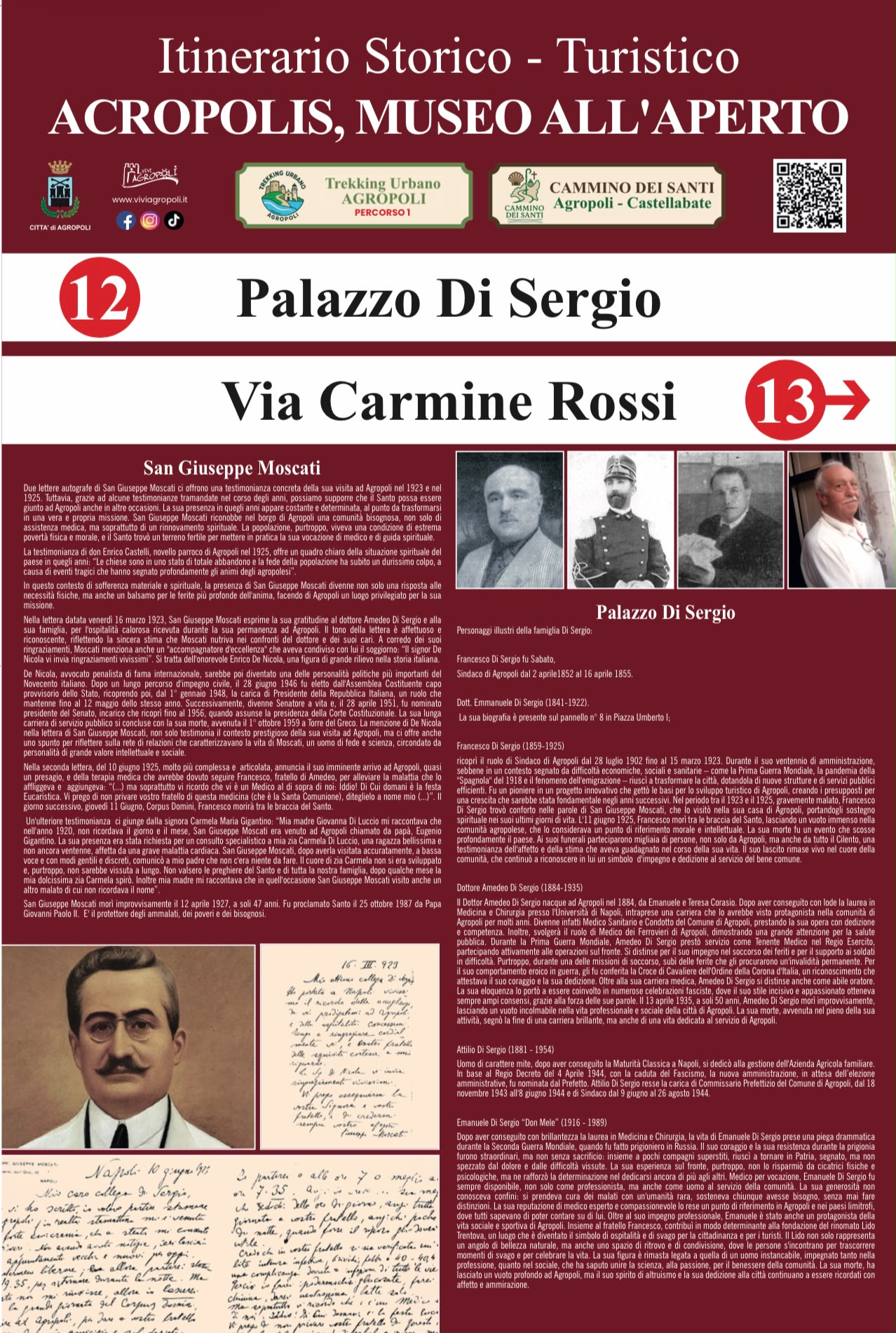
Two autograph letters from Saint Giuseppe Moscati provide concrete evidence of his visits to Agropoli in 1923 and 1925. However, based on some testimonies passed down over the years, it is possible that the Saint visited Agropoli on other occasions as well. His presence during those years appears constant and determined, to the point of becoming a true mission. Saint Giuseppe Moscati recognized in the village of Agropoli a community in need—not only of medical assistance but above all of spiritual renewal. Unfortunately, the population lived in extreme physical and moral poverty, providing fertile ground for the Saint to exercise his vocation as both a physician and a spiritual guide.
The testimony of Don Enrico Castelli, newly appointed parish priest of Agropoli in 1925, offers a clear picture of the spiritual situation of the town at that time: “The churches are in a state of total neglect, and the faith of the population has suffered a severe blow due to tragic events that deeply affected the hearts of the people of Agropoli.”
In this context of material and spiritual suffering, the presence of Saint Giuseppe Moscati became not only a response to physical needs but also a balm for the deepest wounds of the soul, making Agropoli a privileged place for his mission.
In the letter dated Friday, March 16, 1923, Saint Giuseppe Moscati expresses his gratitude to Dr. Amedeo Di Sergio and his family for the warm hospitality received during his stay in Agropoli. The tone of the letter is affectionate and grateful, reflecting the sincere esteem Moscati had for the doctor and his loved ones. Accompanying his thanks, Moscati also mentions an “excellent companion” who shared the visit with him: “Mr. De Nicola sends you his warmest thanks.” This refers to the Honorable Enrico De Nicola, a figure of great importance in Italian history.
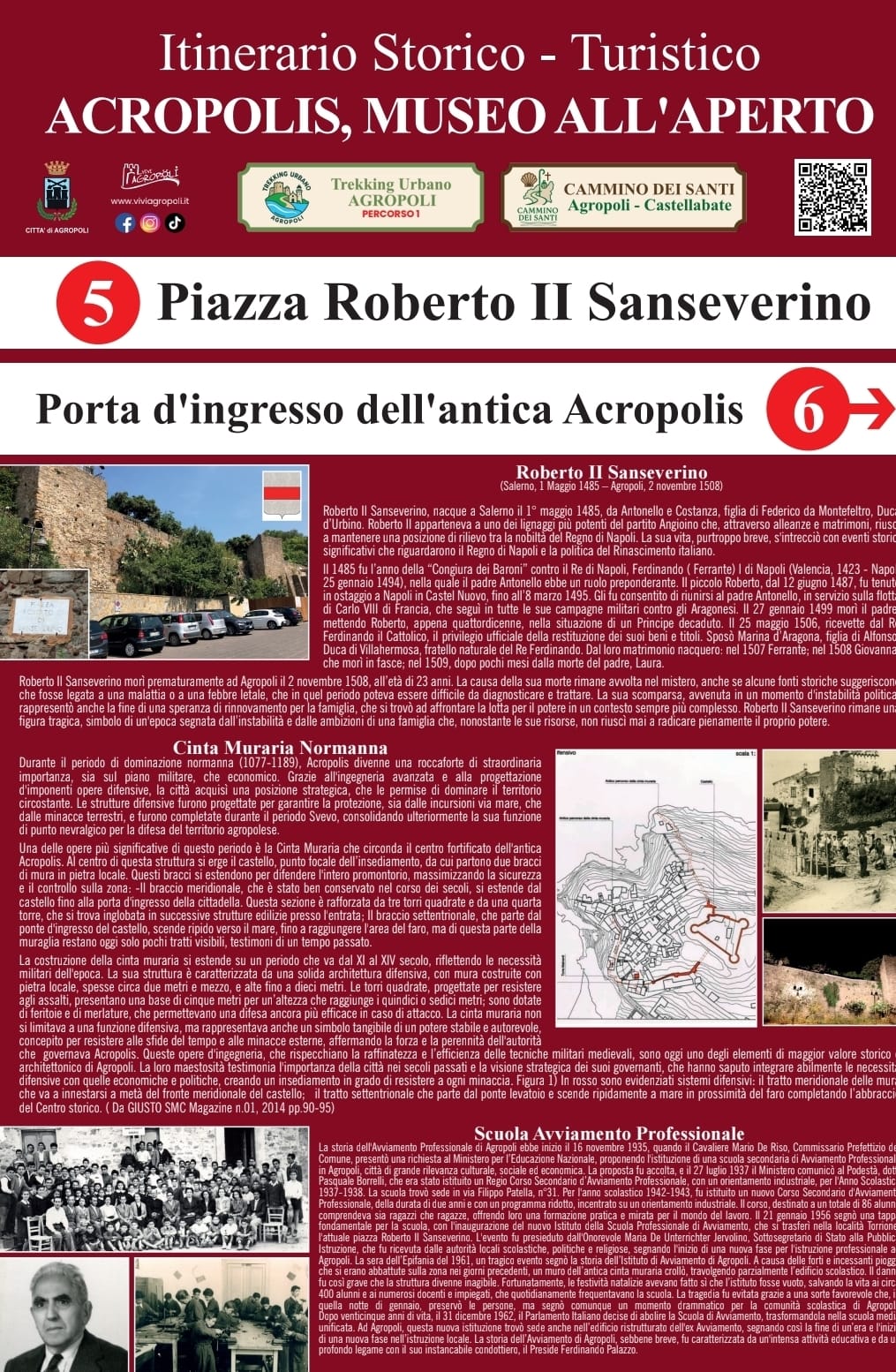
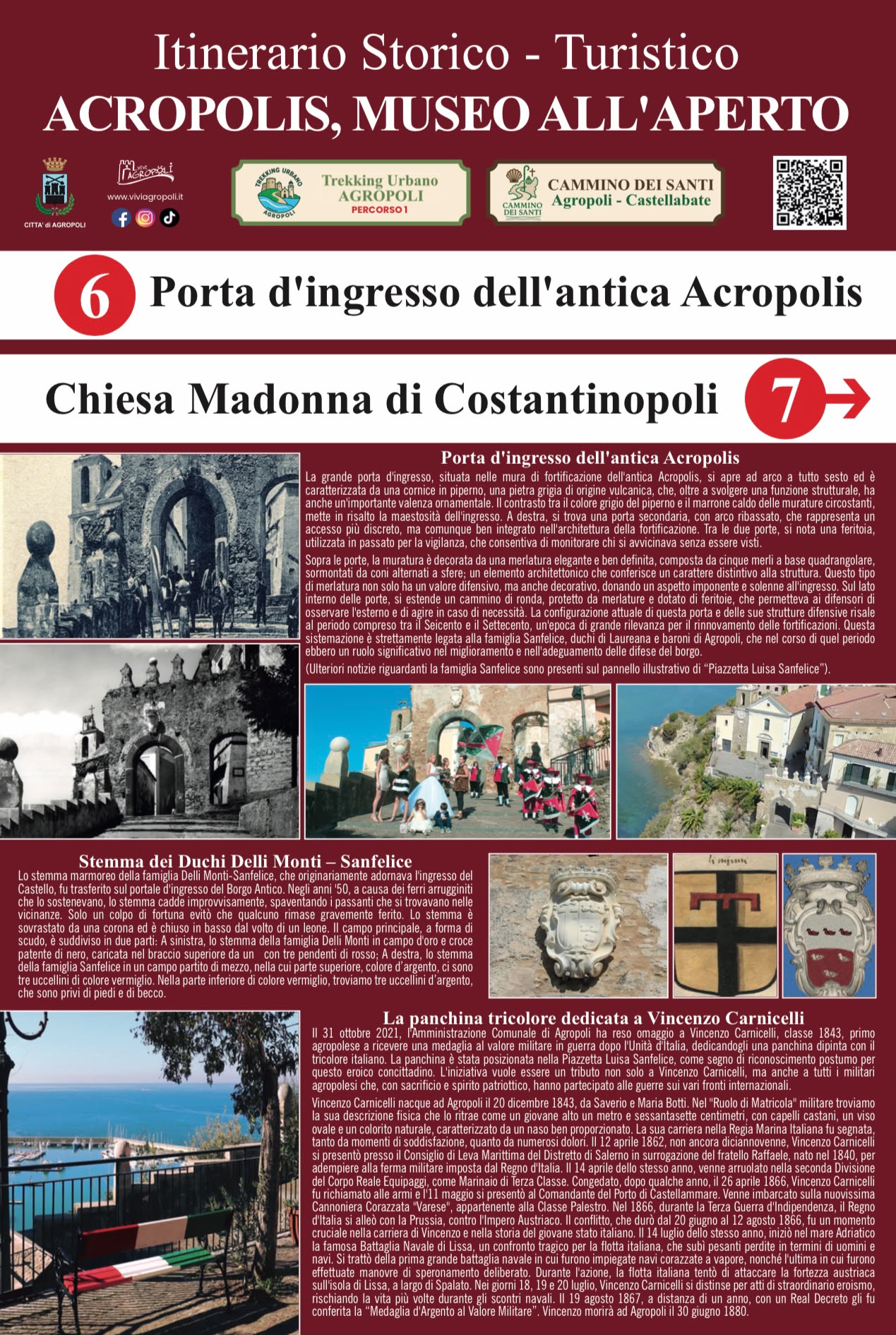
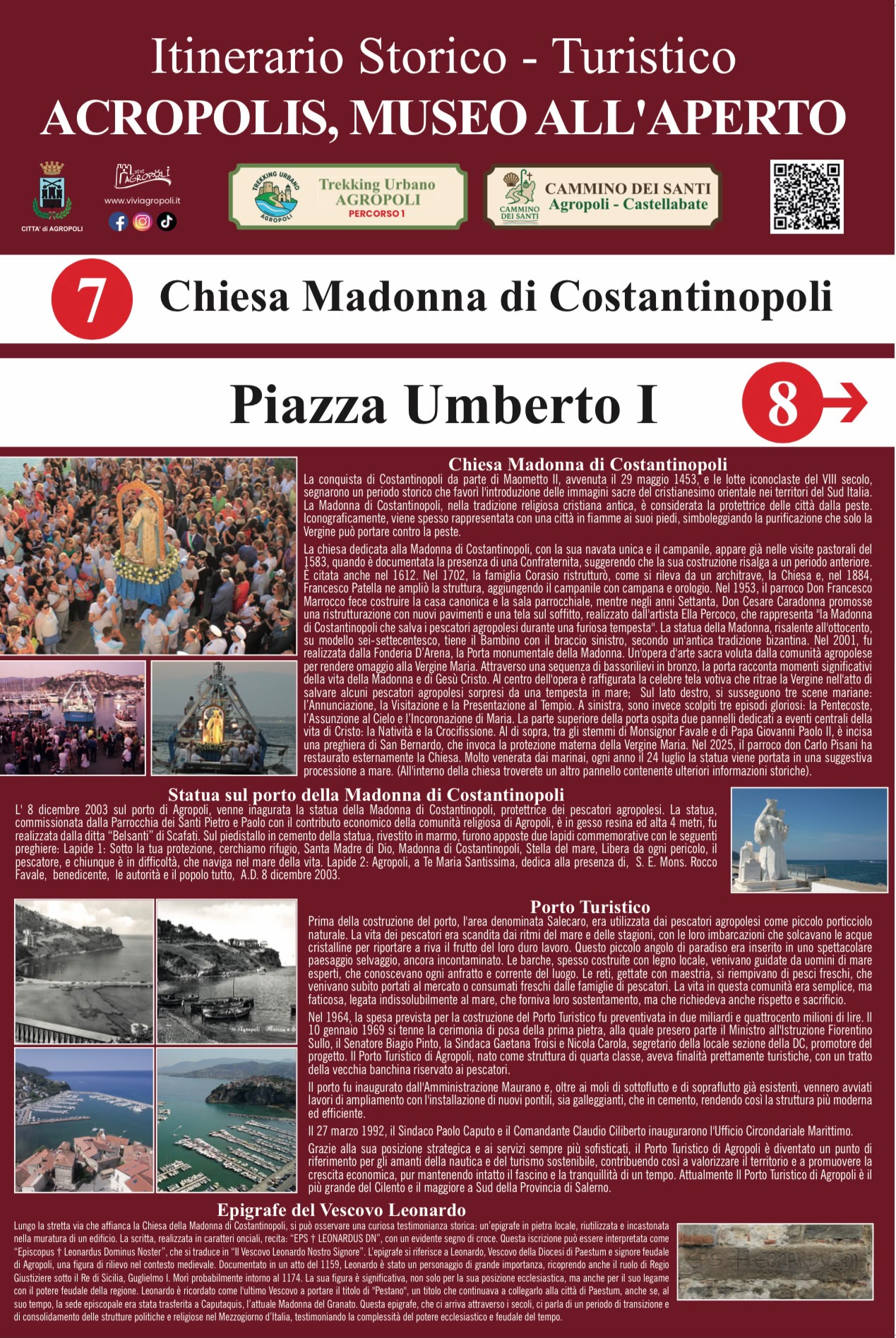
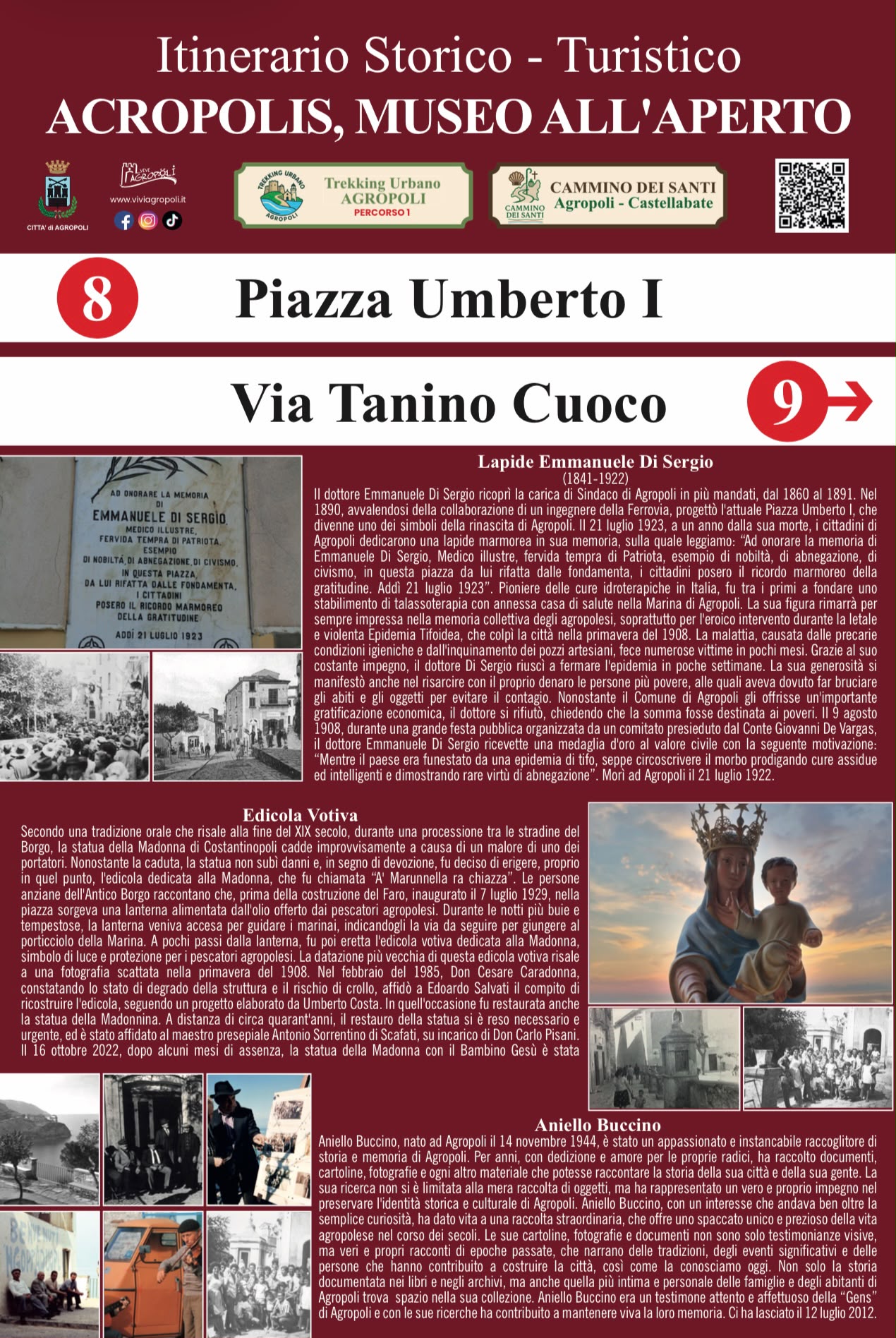
De Nicola, an internationally renowned criminal lawyer, would later become one of the most important political figures of twentieth-century Italy. After a long period of civic service, on June 28, 1946, he was elected by the Constituent Assembly as the Provisional Head of State, and then, from January 1, 1948, he served as President of the Italian Republic, a role he held until May 12 of the same year. Subsequently, he became a life senator and, on April 28, 1951, was appointed President of the Senate, a position he held until 1956, when he assumed the presidency of the Constitutional Court. His long public service ended with his death on October 1, 1959, in Torre del Greco.
The mention of De Nicola in Saint Giuseppe Moscati’s letter not only attests to the prestigious context of his visit to Agropoli but also offers insight into the network of relationships surrounding Moscati, a man of faith and science, among intellectual and socially influential personalities.
In the second letter, dated June 10, 1925, much longer and more detailed, he announces his imminent arrival in Agropoli, almost as a premonition, and mentions the medical treatment that Francesco, Amedeo’s brother, would need to alleviate his illness, adding:
“(…) but above all, I remind you that there is a Doctor above us: God! Whose Eucharistic feast is tomorrow. I beg you not to deprive your brother of this medicine (which is Holy Communion); tell him on my behalf (…)”.
The following day, Thursday, June 11, Corpus Christi, Francesco would die in the arms of the Saint.
Another testimony comes from Mrs. Carmela Maria Gigantino:
“My mother, Giovanna Di Luccio, told me that in 1920—she could not remember the day or month—Saint Giuseppe Moscati came to Agropoli at the request of my father, Eugenio Gigantino. His presence was requested for a specialist consultation for my aunt Carmela Di Luccio, a beautiful young woman not yet twenty, suffering from a severe heart condition. Saint Giuseppe Moscati, after examining her carefully, in a low voice and with gentle, discreet manners, told my father that there was nothing to be done. Aunt Carmela’s heart had not developed properly, and unfortunately, she would not live long. Neither the prayers of the Saint nor those of our family could change this; after a few months, my sweet aunt Carmela passed away. My mother also told me that on that occasion Saint Giuseppe Moscati visited another patient, whose name she could not recall.”
Saint Giuseppe Moscati died suddenly on April 12, 1927, at only 47 years old. He was canonized on October 25, 1987, by Pope John Paul II. He is the patron saint of the sick, the poor, and those in need.
Palazzo Di Sergio
Notable Figures of the Di Sergio Family:
Francesco Di Sergio (Sabato)
Mayor of Agropoli from April 2, 1852, to April 16, 1855.
Dr. Emmanuele Di Sergio (1841–1922)
His biography can be found on panel no. 8 in Piazza Umberto I.
Francesco Di Sergio (1859–1925)
He served as Mayor of Agropoli from July 28, 1902, to March 15, 1923. During his twenty-year administration, despite a context marked by economic, social, and health challenges—such as World War I, the 1918 “Spanish Flu” pandemic, and emigration—he succeeded in transforming the city, providing new infrastructure and efficient public services. He was a pioneer in an innovative project that laid the foundations for Agropoli’s tourism development, creating the conditions for growth that would be crucial in later years.
Between 1923 and 1925, seriously ill, Francesco Di Sergio found comfort in the words of Saint Giuseppe Moscati, who visited him at his home in Agropoli, offering spiritual support in his final days. On June 11, 1925, Francesco died in the arms of the Saint, leaving an immense void in the Agropoli community, which regarded him as a moral and intellectual guide. His death deeply shook the town. Thousands attended his funeral, not only from Agropoli but from across Cilento, a testament to the affection and esteem he had earned throughout his life. His legacy lived on in the hearts of the community, which continued to see in him a symbol of commitment and dedication to the common good.
Dr. Amedeo Di Sergio (1884–1935)
Dr. Amedeo Di Sergio was born in Agropoli in 1884 to Emanuele and Teresa Corasio. After graduating with honors in Medicine and Surgery from the University of Naples, he pursued a career that would make him a central figure in the Agropoli community for many years. He became Health Officer and General Practitioner of the Municipality of Agropoli, serving with dedication and competence. He also served as the Physician for Agropoli’s Railway Workers, demonstrating great attention to public health.
During World War I, Amedeo Di Sergio served as a Medical Lieutenant in the Royal Italian Army, actively participating on the front lines. He distinguished himself for his dedication to helping the wounded and supporting soldiers in distress. Unfortunately, during one rescue mission, he sustained injuries that left him permanently disabled. For his heroic conduct in the war, he was awarded the Knight’s Cross of the Order of the Crown of Italy, recognizing his courage and dedication.
Beyond his medical career, Amedeo Di Sergio was also an accomplished orator. His eloquence led him to participate in numerous Fascist celebrations, where his compelling and passionate speeches always earned widespread acclaim. On April 13, 1935, at just 50 years old, Amedeo Di Sergio died suddenly, leaving an irreplaceable void in Agropoli’s professional and social life. His death, occurring in the prime of his activity, marked the end of a brilliant career and a life devoted to the service of Agropoli.
Attilio Di Sergio (1881–1954)
A mild-mannered man, after completing his Classical Studies in Naples, he dedicated himself to managing the family’s agricultural estate. By Royal Decree of April 4, 1944, with the fall of Fascism, the new administration, awaiting local elections, was appointed by the Prefect. Attilio Di Sergio served as Prefectural Commissioner of the Municipality of Agropoli from November 18, 1943, to June 8, 1944, and as Mayor from June 9 to August 26, 1944.
Emanuele Di Sergio “Don Mele” (1916–1989)
After earning his degree in Medicine and Surgery with distinction, Emanuele Di Sergio’s life took a dramatic turn during World War II when he was captured in Russia. His courage and resilience during captivity were extraordinary, but not without sacrifice: he returned to Italy with only a few surviving companions, marked but not broken by the pain and hardships he endured. His experience on the front left him with physical and psychological scars, yet it strengthened his determination to dedicate himself even more to others.
A physician by vocation, Emanuele Di Sergio was always available, not only as a professional but also as a man in service to the community. His generosity knew no bounds: he cared for the sick with rare humanity, helping anyone in need without distinction. His reputation as a skilled and compassionate doctor made him a point of reference in Agropoli and nearby towns, where everyone knew they could rely on him.
In addition to his professional commitment, Emanuele was also a key figure in Agropoli’s social and sports life. Together with his brother Francesco, he played a decisive role in founding the renowned Lido Trentova, a place that became a symbol of hospitality and leisure for both residents and tourists. The Lido not only represents a natural area of beauty but also a gathering place for social interaction and recreation.
His figure remains associated with that of a tireless man, committed both professionally and socially, who combined science with passion for the welfare of the community. His death left a profound void in Agropoli, but his spirit of altruism and dedication to the city continues to be remembered with affection and admiration.
🇩🇪 Heiliger Giuseppe Moscati
Zwei eigenhändige Briefe von Heiliger Giuseppe Moscati liefern konkrete Belege für seine Besuche in Agropoli in den Jahren 1923 und 1925. Aufgrund einiger überlieferter Zeugnisse ist es jedoch möglich, dass der Heilige Agropoli auch bei anderen Gelegenheiten besucht hat. Seine Anwesenheit in diesen Jahren erscheint konstant und entschlossen, bis hin zu einer wahren Mission. Heiliger Giuseppe Moscati erkannte in dem Dorf Agropoli eine Gemeinschaft in Not – nicht nur in medizinischer Hinsicht, sondern vor allem in spiritueller Erneuerung. Leider lebte die Bevölkerung in extremer körperlicher und moralischer Armut, was einen fruchtbaren Boden für den Heiligen bot, seine Berufung als Arzt und geistlicher Führer auszuüben.
Das Zeugnis von Don Enrico Castelli, 1925 frisch ernannter Pfarrer von Agropoli, vermittelt ein klares Bild der spirituellen Situation der Stadt zu dieser Zeit:
„Die Kirchen befinden sich in einem Zustand völliger Vernachlässigung, und der Glaube der Bevölkerung hat durch tragische Ereignisse, die die Herzen der Agropolesi tief getroffen haben, einen schweren Schlag erlitten.“
In diesem Kontext materiellen und spirituellen Leids wurde die Anwesenheit von Heiliger Giuseppe Moscati nicht nur zu einer Antwort auf körperliche Bedürfnisse, sondern auch zu einem Balsam für die tiefsten Wunden der Seele, wodurch Agropoli zu einem privilegierten Ort für seine Mission wurde.
In dem Brief vom Freitag, den 16. März 1923, drückt Heiliger Giuseppe Moscati seinen Dank an Dr. Amedeo Di Sergio und seine Familie für die herzliche Gastfreundschaft während seines Aufenthalts in Agropoli aus. Der Ton des Briefes ist liebevoll und dankbar, was die aufrichtige Wertschätzung widerspiegelt, die Moscati für den Arzt und seine Angehörigen empfand. Begleitend zu seinen Dankesworten erwähnt Moscati auch einen „hervorragenden Begleiter“, der den Besuch mit ihm geteilt hatte:
„Herr De Nicola sendet Ihnen seinen herzlichsten Dank.“
Dies bezieht sich auf den Ehrenwerten Enrico De Nicola, eine bedeutende Persönlichkeit der italienischen Geschichte. De Nicola, international renommierter Strafverteidiger, sollte später eine der wichtigsten politischen Persönlichkeiten Italiens im 20. Jahrhundert werden. Nach einer langen Phase öffentlichen Engagements wurde er am 28. Juni 1946 von der Verfassunggebenden Versammlung zum provisorischen Staatsoberhaupt gewählt und diente dann ab dem 1. Januar 1948 als Präsident der Italienischen Republik, ein Amt, das er bis zum 12. Mai desselben Jahres innehatte. Anschließend wurde er Senator auf Lebenszeit und am 28. April 1951 zum Präsidenten des Senats ernannt, ein Amt, das er bis 1956 innehatte, bevor er die Präsidentschaft des Verfassungsgerichts übernahm. Seine lange öffentliche Laufbahn endete mit seinem Tod am 1. Oktober 1959 in Torre del Greco.
Die Erwähnung von De Nicola in Heiliger Giuseppe Moscatis Brief belegt nicht nur den prestigeträchtigen Rahmen seines Besuchs in Agropoli, sondern gibt auch Einblick in das Beziehungsnetzwerk um Moscati, einen Mann des Glaubens und der Wissenschaft, umgeben von intellektuell und gesellschaftlich einflussreichen Persönlichkeiten.
Im zweiten Brief, datiert auf den 10. Juni 1925, viel länger und detaillierter, kündigt er seine bevorstehende Ankunft in Agropoli an, fast wie eine Vorahnung, und erwähnt die medizinische Behandlung, die Francesco, Amedeos Bruder, benötigen würde, um seine Krankheit zu lindern, und fügt hinzu:
„(…) aber vor allem erinnere ich Sie daran, dass es einen Arzt über uns gibt: Gott! Dessen Eucharistisches Fest morgen ist. Ich bitte Sie, Ihren Bruder nicht von dieser Medizin (der Heiligen Kommunion) zu berauben; sagen Sie es ihm in meinem Namen (…)“.
Am folgenden Tag, Donnerstag, den 11. Juni, Fronleichnam, würde Francesco in den Armen des Heiligen sterben.
Ein weiteres Zeugnis kommt von Frau Carmela Maria Gigantino:
„Meine Mutter, Giovanna Di Luccio, erzählte mir, dass im Jahr 1920 – sie konnte sich weder an Tag noch Monat erinnern – Heiliger Giuseppe Moscati nach Agropoli kam, auf Anfrage meines Vaters Eugenio Gigantino. Seine Anwesenheit wurde für eine Spezialistenkonsultation bei meiner Tante Carmela Di Luccio benötigt, einer wunderschönen jungen Frau, noch keine zwanzig Jahre alt, die an einer schweren Herzkrankheit litt. Heiliger Giuseppe Moscati untersuchte sie sorgfältig, in leiser Stimme und mit sanften, diskreten Manieren, und teilte meinem Vater mit, dass nichts zu tun sei. Das Herz meiner Tante Carmela hatte sich nicht richtig entwickelt, und leider würde sie nicht lange leben. Weder die Gebete des Heiligen noch die unserer Familie konnten dies ändern; nach einigen Monaten verstarb meine liebste Tante Carmela. Meine Mutter erzählte mir auch, dass Heiliger Giuseppe Moscati an diesem Tag einen weiteren Patienten besuchte, dessen Namen sie sich nicht erinnerte.“
Heiliger Giuseppe Moscati starb plötzlich am 12. April 1927 im Alter von nur 47 Jahren. Er wurde am 25. Oktober 1987 von Papst Johannes Paul II. heiliggesprochen. Er ist der Schutzpatron der Kranken, der Armen und der Bedürftigen.
Palazzo Di Sergio – Bedeutende Persönlichkeiten der Familie Di Sergio
Francesco Di Sergio (Sabato)
Bürgermeister von Agropoli vom 2. April 1852 bis 16. April 1855.
Dr. Emmanuele Di Sergio (1841–1922)
Seine Biografie ist auf Tafel Nr. 8 auf der Piazza Umberto I zu finden.
Francesco Di Sergio (1859–1925)
Er war Bürgermeister von Agropoli vom 28. Juli 1902 bis 15. März 1923. Während seiner zwanzigjährigen Amtszeit gelang es ihm trotz wirtschaftlicher, sozialer und gesundheitlicher Herausforderungen – wie dem Ersten Weltkrieg, der „Spanischen Grippe“ von 1918 und der Emigration – die Stadt zu transformieren, neue Infrastruktur und effiziente öffentliche Dienstleistungen bereitzustellen. Er war ein Pionier eines innovativen Projekts, das die Grundlagen für die touristische Entwicklung Agropolis legte und die Voraussetzungen für späteres Wachstum schuf.
Zwischen 1923 und 1925, schwer krank, fand Francesco Di Sergio Trost in den Worten von Heiliger Giuseppe Moscati, der ihn in seinem Haus in Agropoli besuchte und ihm in seinen letzten Tagen spirituelle Unterstützung gab. Am 11. Juni 1925 starb Francesco in den Armen des Heiligen und hinterließ eine große Lücke in der Gemeinde, die ihn als moralischen und intellektuellen Führer betrachtete. Sein Tod erschütterte die Stadt zutiefst. Tausende nahmen an seiner Beerdigung teil, nicht nur aus Agropoli, sondern aus dem gesamten Cilento – ein Zeugnis der Zuneigung und Wertschätzung, die er sich im Laufe seines Lebens erworben hatte. Sein Vermächtnis lebte im Herzen der Gemeinschaft weiter, die in ihm weiterhin ein Symbol für Engagement und Hingabe zum Gemeinwohl sah.
Dr. Amedeo Di Sergio (1884–1935)
Dr. Amedeo Di Sergio wurde 1884 in Agropoli als Sohn von Emanuele und Teresa Corasio geboren. Nach seinem Abschluss in Medizin und Chirurgie mit Auszeichnung an der Universität Neapel verfolgte er eine Karriere, die ihn viele Jahre lang zu einer zentralen Figur der Gemeinschaft von Agropoli machte. Er wurde Gesundheitsbeamter und Gemeindearzt von Agropoli, wo er seine Arbeit mit Hingabe und Kompetenz ausführte. Außerdem war er Arzt der Eisenbahner von Agropoli und zeigte großes Engagement für die öffentliche Gesundheit.
Während des Ersten Weltkriegs diente Amedeo Di Sergio als medizinischer Leutnant in der Königlich Italienischen Armee und war aktiv an den Fronten tätig. Er zeichnete sich durch seine Hingabe an die Verletzten und die Unterstützung in Not geratener Soldaten aus. Leider erlitt er während einer Rettungsmission Verletzungen, die ihn dauerhaft behinderte. Für sein heroisches Verhalten im Krieg erhielt er das Ritterkreuz des Ordens der Krone Italiens, eine Anerkennung seines Mutes und seiner Hingabe.
Neben seiner medizinischen Karriere war Amedeo Di Sergio auch ein begabter Redner. Seine Eloquenz führte dazu, dass er an zahlreichen faschistischen Feierlichkeiten teilnahm, bei denen seine leidenschaftlichen und eindringlichen Reden stets große Zustimmung erhielten. Am 13. April 1935 starb Amedeo Di Sergio im Alter von nur 50 Jahren plötzlich und hinterließ eine unersetzliche Lücke im beruflichen und sozialen Leben Agropolis. Sein Tod, im Höhepunkt seiner Tätigkeit, markierte das Ende einer brillanten Karriere und eines Lebens, das dem Dienst an Agropoli gewidmet war.
Attilio Di Sergio (1881–1954)
Ein sanftmütiger Mann, der nach Abschluss seines klassischen Studiums in Neapel die Verwaltung des Familienbauernhofs übernahm. Durch das königliche Dekret vom 4. April 1944 wurde mit dem Fall des Faschismus die neue Verwaltung, in Erwartung lokaler Wahlen, vom Präfekten eingesetzt. Attilio Di Sergio diente als Präfektural-Kommissar der Gemeinde Agropoli vom 18. November 1943 bis 8. Juni 1944 und als Bürgermeister vom 9. Juni bis 26. August 1944.
Emanuele Di Sergio “Don Mele” (1916–1989)
Nach dem erfolgreichen Abschluss seines Medizinstudiums nahm das Leben von Emanuele Di Sergio während des Zweiten Weltkriegs eine dramatische Wendung, als er in Russland in Gefangenschaft geriet. Sein Mut und seine Widerstandskraft während der Gefangenschaft waren außergewöhnlich, aber nicht ohne Opfer: Zusammen mit wenigen überlebenden Kameraden kehrte er in die Heimat zurück, gezeichnet, aber nicht gebrochen durch Schmerz und Entbehrungen.
Seine Erfahrung an der Front hinterließ körperliche und psychische Narben, stärkte jedoch seinen Willen, sich noch mehr anderen zu widmen. Als Arzt aus Berufung war Emanuele Di Sergio stets verfügbar, nicht nur als Fachmann, sondern auch als Mensch im Dienst der Gemeinschaft. Seine Großzügigkeit kannte keine Grenzen: Er kümmerte sich um Kranke mit seltener Menschlichkeit und half jedem Bedürftigen ohne Unterschied. Sein Ruf als erfahrener und mitfühlender Arzt machte ihn zu einer Bezugsperson in Agropoli und den umliegenden Gemeinden.
Neben seinem beruflichen Engagement war Emanuele auch eine zentrale Figur im sozialen und sportlichen Leben Agropolis. Zusammen mit seinem Bruder Francesco spielte er eine entscheidende Rolle bei der Gründung des renommierten Lido Trentova, einem Ort, der zum Symbol für Gastfreundschaft und Freizeit für Einwohner und Touristen wurde. Der Lido repräsentiert nicht nur einen natürlichen Schönheitsort, sondern auch einen Treffpunkt für soziale Interaktion und Erholung.
Seine Figur bleibt mit der eines unermüdlichen Mannes verbunden, der sowohl beruflich als auch gesellschaftlich engagiert war und Wissenschaft mit Leidenschaft für das Wohl der Gemeinschaft verband. Sein Tod hinterließ eine tiefe Lücke in Agropoli, doch sein Geist des Altruismus und seine Hingabe an die Stadt werden weiterhin mit Zuneigung und Bewunderung in Erinnerung behalten.
🇫🇷 Saint Giuseppe Moscati
Deux lettres autographes de Saint Giuseppe Moscati fournissent une preuve concrète de ses visites à Agropoli en 1923 et 1925. Cependant, d’après certains témoignages transmis au fil des années, il est possible que le Saint ait également visité Agropoli à d’autres occasions. Sa présence durant ces années semble constante et déterminée, au point de devenir une véritable mission. Saint Giuseppe Moscati reconnut dans le village d’Agropoli une communauté dans le besoin — non seulement d’assistance médicale, mais surtout d’un renouveau spirituel. Malheureusement, la population vivait dans une extrême pauvreté physique et morale, offrant un terrain fertile au Saint pour exercer sa vocation à la fois de médecin et de guide spirituel.
Le témoignage de Don Enrico Castelli, récemment nommé curé d’Agropoli en 1925, offre une image claire de la situation spirituelle de la ville à cette époque :
« Les églises sont dans un état de totale négligence, et la foi de la population a subi un dur coup à cause d’événements tragiques qui ont profondément marqué le cœur des habitants d’Agropoli. »
Dans ce contexte de souffrance matérielle et spirituelle, la présence de Saint Giuseppe Moscati devint non seulement une réponse aux besoins physiques, mais aussi un baume pour les blessures les plus profondes de l’âme, faisant d’Agropoli un lieu privilégié pour sa mission.
Dans la lettre datée du vendredi 16 mars 1923, Saint Giuseppe Moscati exprime sa gratitude au Dr Amedeo Di Sergio et à sa famille pour l’accueil chaleureux reçu lors de son séjour à Agropoli. Le ton de la lettre est affectueux et reconnaissant, reflétant l’estime sincère que Moscati avait pour le médecin et ses proches. Accompagnant ses remerciements, Moscati mentionne également un « excellent compagnon » qui partagea la visite avec lui :
« M. De Nicola vous adresse ses remerciements les plus chaleureux. »
Il s’agit de l’honorable Enrico De Nicola, figure de grande importance dans l’histoire italienne. De Nicola, avocat pénaliste de renommée internationale, deviendra plus tard l’une des personnalités politiques les plus importantes de l’Italie du XXe siècle. Après une longue période de service civil, le 28 juin 1946, il fut élu par l’Assemblée Constituante Chef d’État provisoire, puis, à partir du 1er janvier 1948, Président de la République italienne, rôle qu’il occupa jusqu’au 12 mai de la même année. Par la suite, il devint sénateur à vie et, le 28 avril 1951, fut nommé Président du Sénat, fonction qu’il exerça jusqu’en 1956, avant de présider la Cour constitutionnelle. Sa longue carrière au service public se termina avec sa mort, survenue le 1er octobre 1959 à Torre del Greco.
La mention de De Nicola dans la lettre de Saint Giuseppe Moscati témoigne non seulement du contexte prestigieux de sa visite à Agropoli, mais offre également un aperçu du réseau de relations entourant Moscati, un homme de foi et de science, parmi des personnalités intellectuelles et socialement influentes.
Dans la seconde lettre, datée du 10 juin 1925, beaucoup plus longue et détaillée, il annonce son arrivée imminente à Agropoli, presque comme une prémonition, et mentionne le traitement médical dont Francesco, le frère d’Amedeo, aurait besoin pour soulager sa maladie, ajoutant :
« (…) mais surtout, je vous rappelle qu’il y a un Médecin au-dessus de nous : Dieu ! Dont la fête eucharistique est demain. Je vous supplie de ne pas priver votre frère de ce remède (qui est la Sainte Communion) ; dites-le-lui de ma part (…) ».
Le jour suivant, jeudi 11 juin, jour de la Fête du Saint-Sacrement, Francesco mourut dans les bras du Saint.
Un autre témoignage nous vient de Mme Carmela Maria Gigantino :
« Ma mère, Giovanna Di Luccio, me racontait qu’en 1920 — elle ne se souvenait ni du jour ni du mois — Saint Giuseppe Moscati était venu à Agropoli à la demande de mon père, Eugenio Gigantino. Sa présence avait été demandée pour une consultation spécialisée pour ma tante Carmela Di Luccio, une belle jeune fille de moins de vingt ans, souffrant d’une grave maladie cardiaque. Saint Giuseppe Moscati, après l’avoir examinée avec soin, d’une voix basse et avec des manières douces et discrètes, dit à mon père qu’il n’y avait rien à faire. Le cœur de ma tante Carmela ne s’était pas développé correctement et, malheureusement, elle ne vivrait pas longtemps. Ni les prières du Saint, ni celles de notre famille n’ont pu changer cela ; après quelques mois, ma douce tante Carmela s’éteignit. Ma mère me raconta aussi que, lors de cette occasion, Saint Giuseppe Moscati visita un autre malade dont elle ne se souvenait plus du nom. »
Saint Giuseppe Moscati mourut soudainement le 12 avril 1927, à seulement 47 ans. Il fut canonisé le 25 octobre 1987 par le pape Jean-Paul II. Il est le saint patron des malades, des pauvres et des personnes dans le besoin.
Palazzo Di Sergio – Personnalités remarquables de la famille Di Sergio
Francesco Di Sergio (Sabato)
Maire d’Agropoli du 2 avril 1852 au 16 avril 1855.
Dr Emmanuele Di Sergio (1841–1922)
Sa biographie est visible sur le panneau n°8 de la Piazza Umberto I.
Francesco Di Sergio (1859–1925)
Il fut maire d’Agropoli du 28 juillet 1902 au 15 mars 1923. Pendant ses vingt années de mandat, malgré un contexte marqué par des difficultés économiques, sociales et sanitaires — telles que la Première Guerre mondiale, la pandémie de grippe espagnole de 1918 et l’émigration — il réussit à transformer la ville, en fournissant de nouvelles infrastructures et des services publics efficaces. Il fut un pionnier d’un projet innovant qui posa les bases du développement touristique d’Agropoli, créant les conditions d’une croissance essentielle dans les années suivantes.
Entre 1923 et 1925, gravement malade, Francesco Di Sergio trouva du réconfort dans les paroles de Saint Giuseppe Moscati, qui lui rendit visite à son domicile à Agropoli, lui apportant un soutien spirituel dans ses derniers jours. Le 11 juin 1925, Francesco mourut dans les bras du Saint, laissant un vide immense dans la communauté d’Agropoli, qui le considérait comme un guide moral et intellectuel. Sa mort ébranla profondément la ville. Des milliers de personnes assistèrent à ses funérailles, non seulement d’Agropoli, mais de tout le Cilento, témoignant de l’affection et de l’estime qu’il avait gagnées tout au long de sa vie. Son héritage continua de vivre dans le cœur de la communauté, qui vit en lui un symbole d’engagement et de dévouement au bien commun.
Dr Amedeo Di Sergio (1884–1935)
Le Dr Amedeo Di Sergio naquit à Agropoli en 1884, fils d’Emanuele et Teresa Corasio. Après avoir obtenu avec mention son diplôme de médecine et chirurgie à l’Université de Naples, il entama une carrière qui ferait de lui une figure centrale de la communauté d’Agropoli pendant de nombreuses années. Il devint médecin sanitaire et médecin généraliste de la municipalité d’Agropoli, exerçant son métier avec dévouement et compétence. Il fut également médecin des cheminots d’Agropoli, faisant preuve d’une grande attention pour la santé publique.
Pendant la Première Guerre mondiale, Amedeo Di Sergio servit comme lieutenant médecin dans l’Armée royale italienne, participant activement sur le front. Il se distingua par son engagement auprès des blessés et son soutien aux soldats en difficulté. Malheureusement, lors d’une mission de secours, il subit des blessures qui le rendirent invalide à vie. Pour son comportement héroïque pendant la guerre, il reçut la Croix de Chevalier de l’Ordre de la Couronne d’Italie, reconnaissance de son courage et de son dévouement.
En plus de sa carrière médicale, Amedeo Di Sergio se distingua également comme orateur accompli. Son éloquence le fit participer à de nombreuses célébrations fascistes, où ses discours passionnés et convaincants recueillaient toujours un large succès. Le 13 avril 1935, à seulement 50 ans, Amedeo Di Sergio mourut soudainement, laissant un vide irremplaçable dans la vie professionnelle et sociale d’Agropoli. Sa mort, survenue au sommet de son activité, marqua la fin d’une brillante carrière et d’une vie consacrée au service d’Agropoli.
Attilio Di Sergio (1881–1954)
Homme de caractère doux, après avoir terminé ses études classiques à Naples, il se consacra à la gestion de l’exploitation agricole familiale. Par décret royal du 4 avril 1944, avec la chute du fascisme, la nouvelle administration, en attendant les élections locales, fut nommée par le préfet. Attilio Di Sergio exerça les fonctions de commissaire préfectoral de la commune d’Agropoli du 18 novembre 1943 au 8 juin 1944, et de maire du 9 juin au 26 août 1944.
Emanuele Di Sergio « Don Mele » (1916–1989)
Après avoir obtenu son diplôme de médecine et chirurgie avec distinction, la vie d’Emanuele Di Sergio prit un tournant dramatique pendant la Seconde Guerre mondiale lorsqu’il fut capturé en Russie. Son courage et sa résilience pendant la captivité furent extraordinaires, mais non sans sacrifices : il revint en Italie avec seulement quelques compagnons survivants, marqué mais pas brisé par la douleur et les épreuves endurées.
Son expérience au front lui laissa des cicatrices physiques et psychologiques, mais renforça sa détermination à se consacrer encore davantage aux autres. Médecin par vocation, Emanuele Di Sergio fut toujours disponible, non seulement comme professionnel, mais aussi comme homme au service de la communauté. Sa générosité n’avait pas de limites : il prenait soin des malades avec une humanité rare, aidant quiconque avait besoin, sans distinction. Sa réputation de médecin compétent et compatissant fit de lui une référence à Agropoli et dans les villages environnants, où chacun savait pouvoir compter sur lui.
En plus de son engagement professionnel, Emanuele fut également un acteur clé de la vie sociale et sportive d’Agropoli. Avec son frère Francesco, il joua un rôle décisif dans la fondation du célèbre Lido Trentova, lieu devenu symbole d’hospitalité et de loisirs pour les habitants et les touristes. Le Lido représente non seulement un lieu de beauté naturelle, mais aussi un espace de rencontre et de convivialité.
Sa figure reste associée à celle d’un homme infatigable, engagé tant professionnellement que socialement, qui a su allier science et passion pour le bien-être de la communauté. Sa mort laissa un vide profond à Agropoli, mais son esprit d’altruisme et son dévouement à la ville continuent d’être rappelés avec affection et admiration.