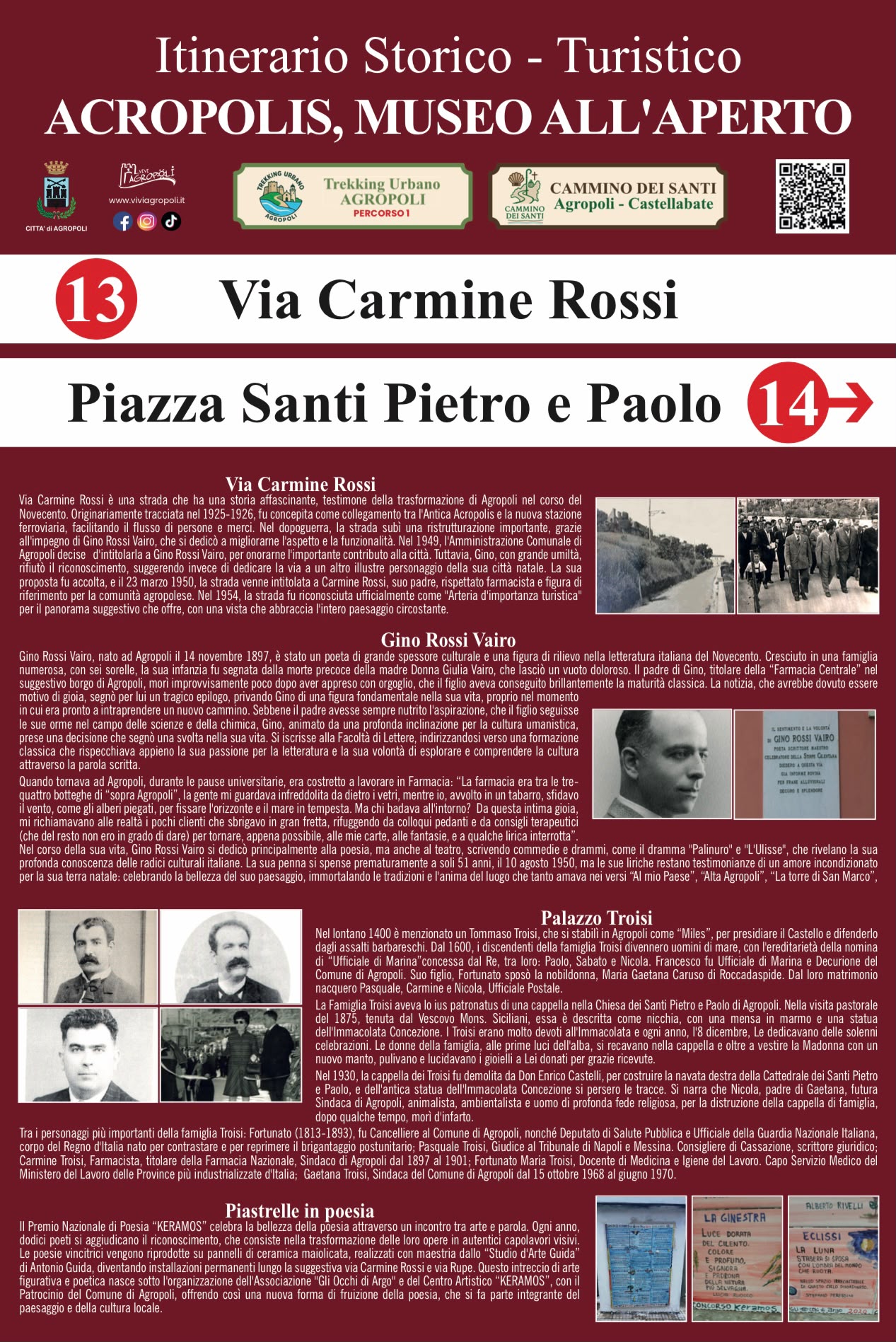
🇬🇧 Via Carmine Rossi
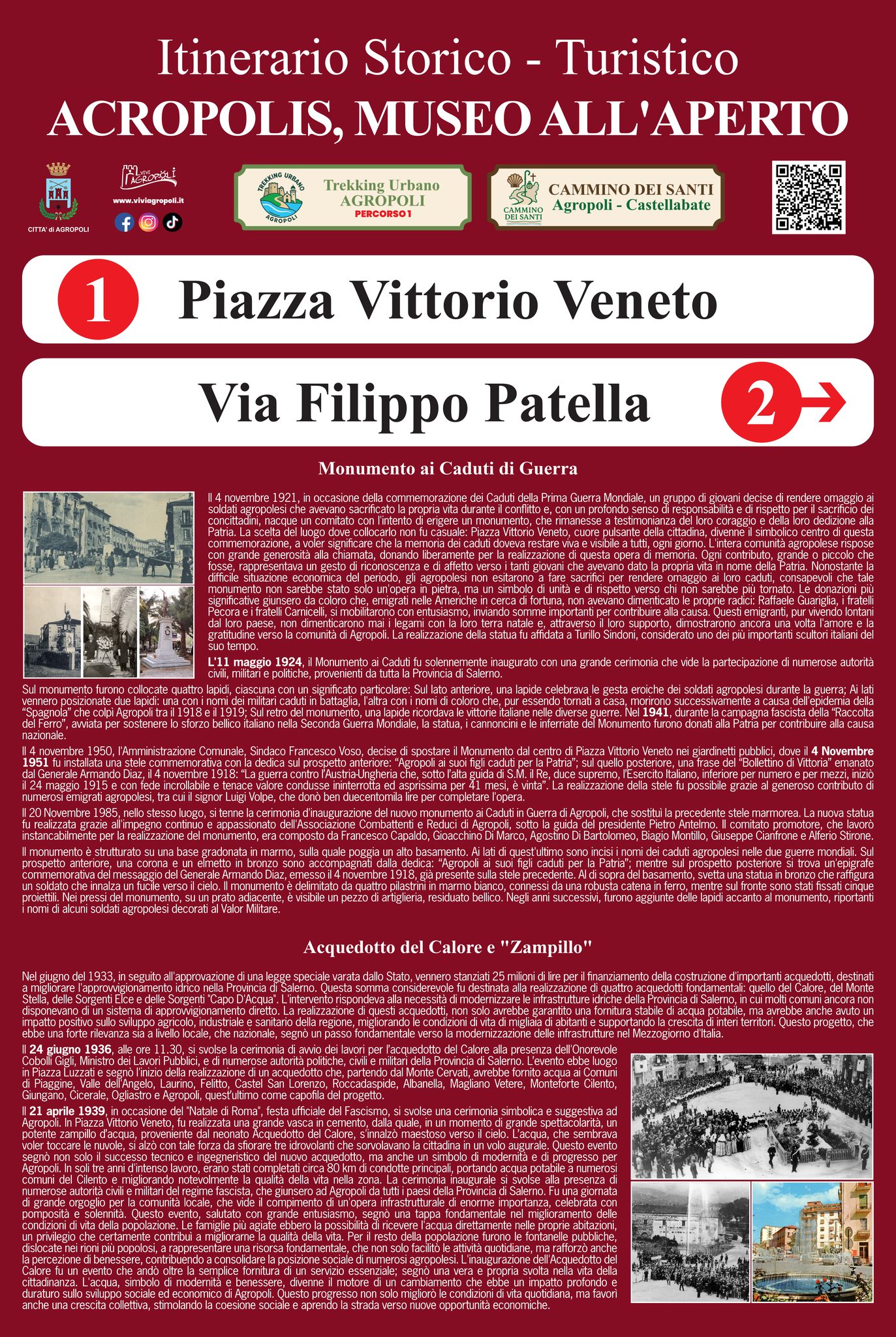
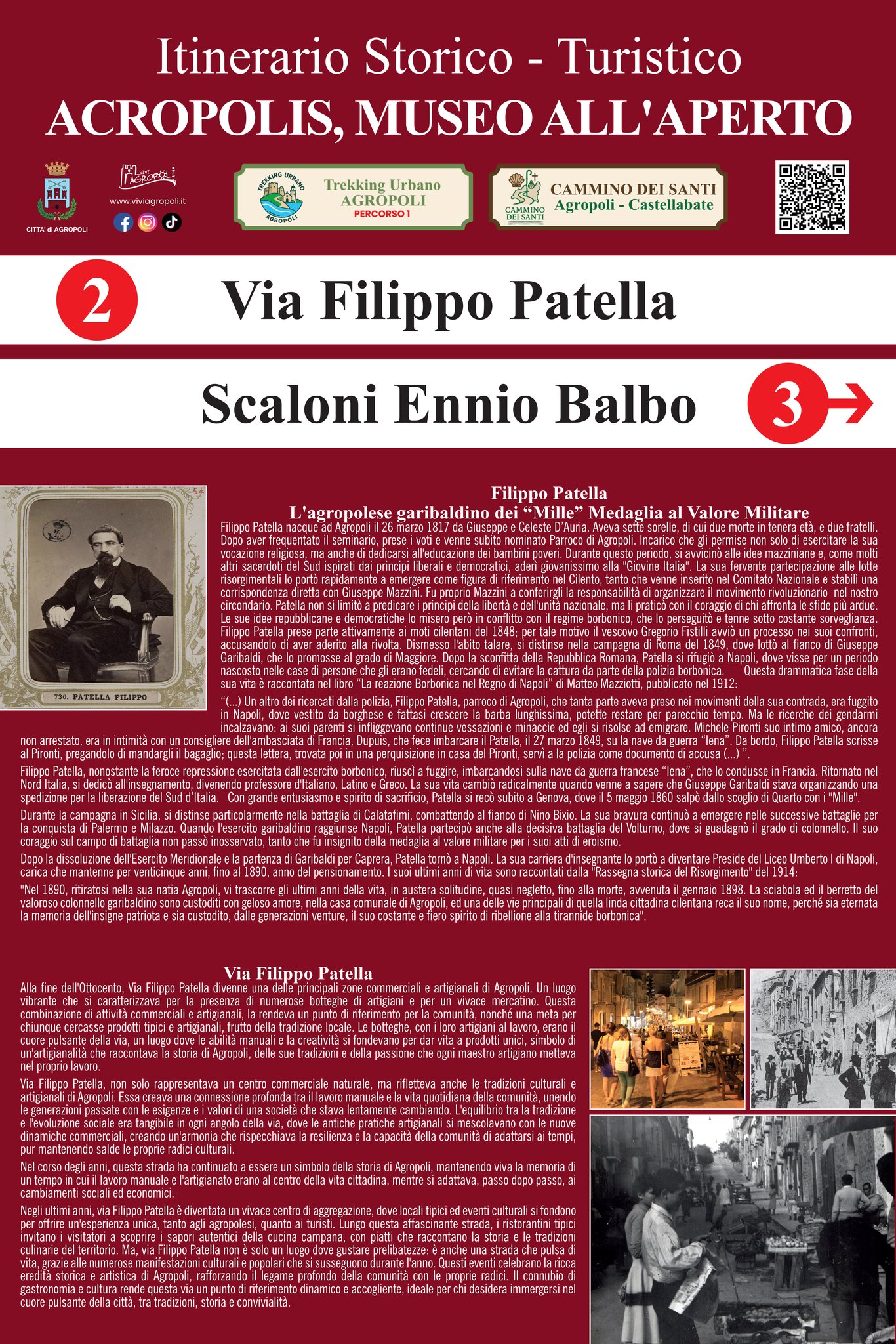
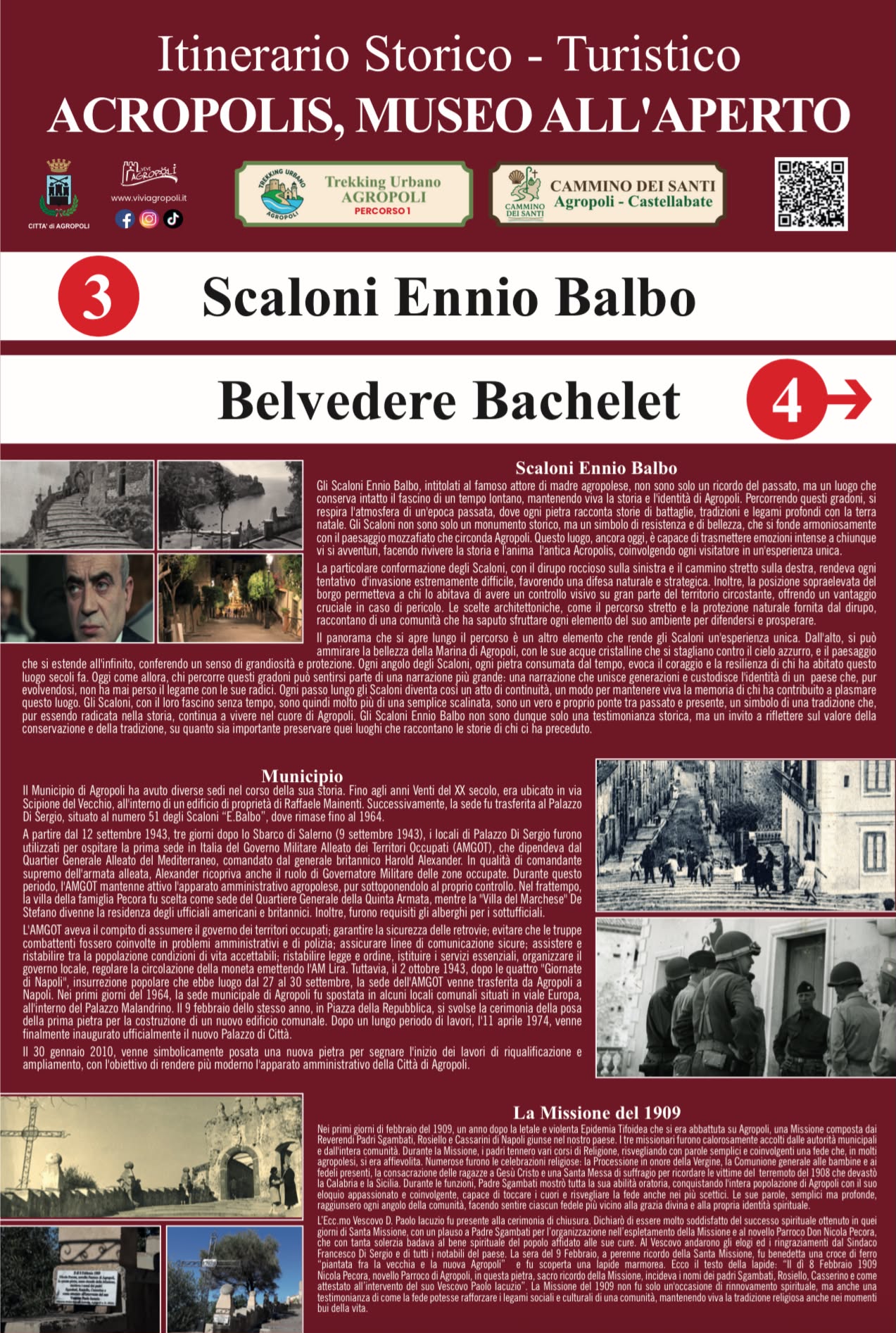
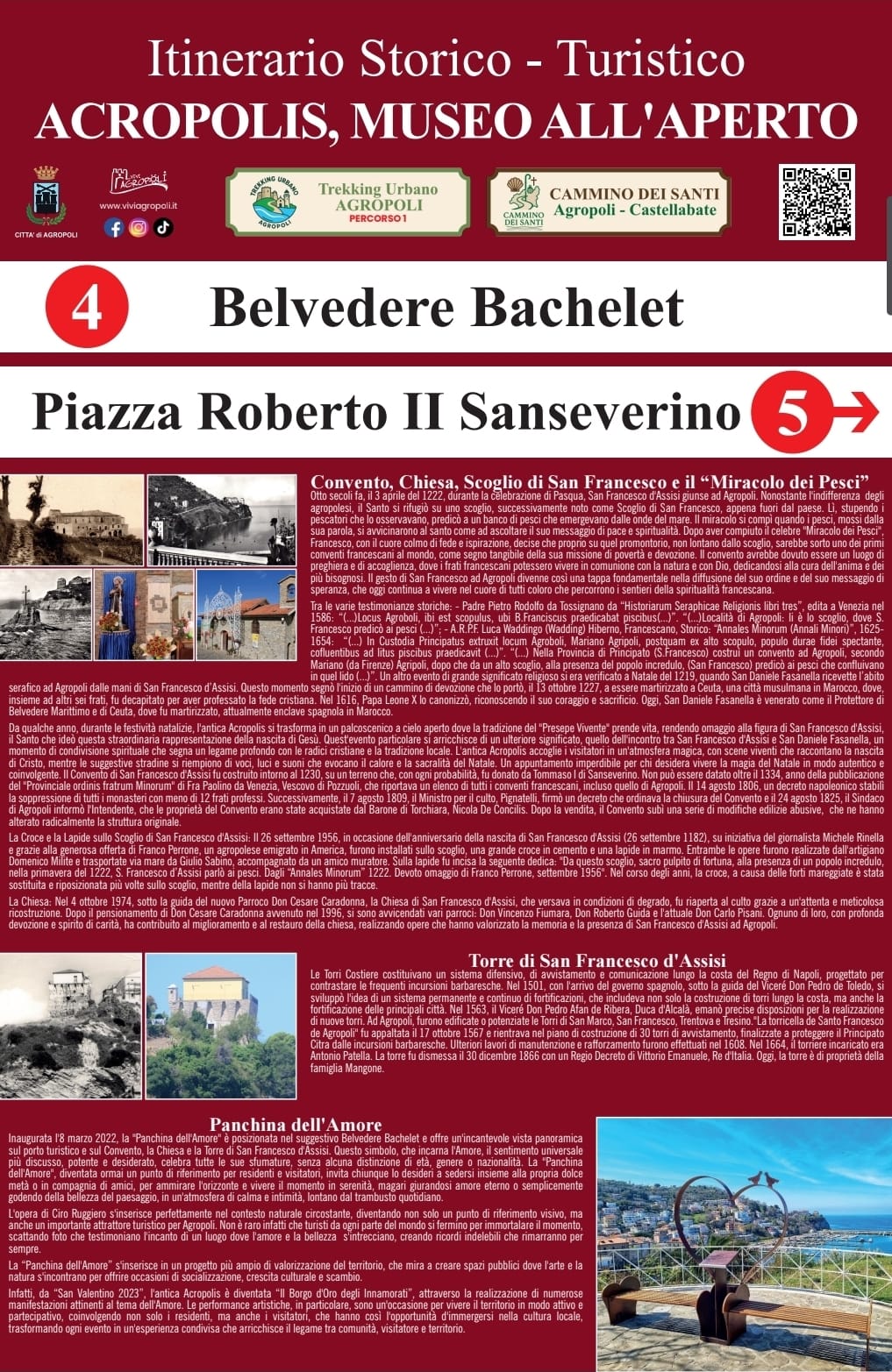
Via Carmine Rossi is a street with a fascinating history, witnessing the transformation of Agropoli throughout the 20th century. Originally laid out in 1925–1926, it was conceived as a connection between the Ancient Acropolis and the new railway station, facilitating the flow of people and goods. After the war, the street underwent significant restructuring, thanks to the efforts of Gino Rossi Vairo, who worked to improve its appearance and functionality.
In 1949, the Municipal Administration of Agropoli decided to name the street after Gino Rossi Vairo to honor his important contribution to the city. However, Gino, with great humility, declined the recognition, suggesting instead that the street be dedicated to another distinguished figure from his hometown. His proposal was accepted, and on March 23, 1950, the street was named after Carmine Rossi, his father, a respected pharmacist and a reference figure for the Agropoli community. In 1954, the street was officially recognized as a “Tourist Importance Artery” for the scenic view it offers, encompassing the entire surrounding landscape.
Gino Rossi Vairo
Gino Rossi Vairo, born in Agropoli on November 14, 1897, was a poet of great cultural depth and an important figure in 20th-century Italian literature. Growing up in a large family with six sisters, his childhood was marked by the early death of his mother, Donna Giulia Vairo, which left a painful void. Gino’s father, owner of the “Farmacia Centrale” in the picturesque town of Agropoli, died suddenly shortly after learning with pride that his son had successfully completed his classical high school studies. What should have been a joyful moment instead became a tragic event, depriving Gino of a fundamental figure in his life just as he was ready to embark on a new path.
Although his father had always hoped that Gino would follow in his footsteps in the field of science and chemistry, Gino, driven by a deep inclination for the humanities, made a decision that marked a turning point in his life. He enrolled in the Faculty of Letters, pursuing a classical education that fully reflected his passion for literature and his desire to explore and understand culture through the written word.
When he returned to Agropoli during university breaks, he was obliged to work at the pharmacy:
“The pharmacy was among the three or four shops in ‘upper Agropoli’; people watched me from behind the windows, chilled, while I, wrapped in a cloak, braved the wind, like bent trees, to fix my gaze on the horizon and the stormy sea. But who cared about the surroundings? From this intimate joy, I was called back to reality by the few customers I served in a hurry, avoiding tedious conversations and therapeutic advice (which, after all, I was not able to give) to return, as soon as possible, to my papers, fantasies, and some unfinished poetry.”
Throughout his life, Gino Rossi Vairo devoted himself mainly to poetry, but also to theater, writing comedies and dramas, such as the plays Palinuro and L’Ulisse, which reveal his deep knowledge of Italian cultural roots. His pen fell silent prematurely at the age of 51, on August 10, 1950, but his verses remain a testament to his unconditional love for his homeland, celebrating the beauty of its landscapes, immortalizing its traditions, and capturing the soul of the place he cherished in poems like Al mio Paese, Alta Agropoli, and La torre di San Marco.
Palazzo Troisi
As far back as the 1400s, a Tommaso Troisi is mentioned as having settled in Agropoli as a “Miles,” to guard the Castle and defend it from Barbary attacks. From the 1600s, the Troisi descendants became men of the sea, inheriting the title of “Naval Officer” granted by the King, including Paolo, Sabato, and Nicola. Francesco was a Naval Officer and Councilor of the Municipality of Agropoli. His son, Fortunato, married the noblewoman Maria Gaetana Caruso of Roccadaspide. Their marriage produced Pasquale, Carmine, and Nicola, a Postal Officer.
The Troisi family held the ius patronatus of a chapel in the Church of Saints Peter and Paul in Agropoli. In the pastoral visit of 1875, conducted by Bishop Mons. Siciliani, it is described as a niche with a marble altar and a statue of the Immaculate Conception. The Troisi family was very devoted to the Immaculate Conception and every year, on December 8, held solemn celebrations. At dawn, the women of the family would go to the chapel, dressing the Madonna in a new mantle and cleaning and polishing the jewelry offered to her in thanks for graces received.
In 1930, Don Enrico Castelli demolished the Troisi chapel to build the right nave of the Cathedral of Saints Peter and Paul, and the ancient statue of the Immaculate Conception was lost. It is said that Nicola, father of Gaetana, future Mayor of Agropoli, animal rights activist, environmentalist, and man of deep religious faith, died of a heart attack some time later due to the destruction of the family chapel.
Among the most important figures of the Troisi family:
- Fortunato (1813–1893): Chancellor of the Municipality of Agropoli, Deputy of Public Health, and Officer of the Italian National Guard, a corps created to fight post-unification brigandage.
- Pasquale Troisi: Judge at the Courts of Naples and Messina, Cassation Counselor, legal writer.
- Carmine Troisi: Pharmacist, owner of the Farmacia Nazionale, Mayor of Agropoli from 1897 to 1901.
- Fortunato Maria Troisi: Professor of Occupational Medicine and Hygiene, Head of the Medical Service at the Ministry of Labor in Italy’s most industrialized provinces.
- Gaetana Troisi: Mayor of Agropoli from October 15, 1968, to June 1970.
Tiles in Poetry
The National Poetry Prize “KERAMOS” celebrates the beauty of poetry through a meeting of art and words. Each year, twelve poets are awarded, with their works transformed into authentic visual masterpieces. The winning poems are reproduced on majolica ceramic panels, skillfully created by the Studio d’Arte Guida of Antonio Guida, becoming permanent installations along the scenic Via Carmine Rossi and Via Rupe. This intertwining of visual art and poetry is organized by the Association “Gli Occhi di Argo” and the Artistic Center “KERAMOS,” with the Patronage of the Municipality of Agropoli, offering a new way to experience poetry as an integral part of the local landscape and culture.
🇩🇪 Via Carmine Rossi
Die Via Carmine Rossi ist eine Straße mit einer faszinierenden Geschichte, die die Transformation von Agropoli im Laufe des 20. Jahrhunderts miterlebt hat. Ursprünglich in den Jahren 1925–1926 angelegt, wurde sie als Verbindung zwischen der Alten Akropolis und dem neuen Bahnhof konzipiert, um den Personen- und Warenverkehr zu erleichtern. Nach dem Krieg wurde die Straße dank des Engagements von Gino Rossi Vairo umfassend umgestaltet, der sich bemühte, ihr Aussehen und ihre Funktionalität zu verbessern.
1949 beschloss die Stadtverwaltung von Agropoli, die Straße nach Gino Rossi Vairo zu benennen, um seinen wichtigen Beitrag für die Stadt zu würdigen. Gino lehnte diese Ehrung jedoch aus großer Bescheidenheit ab und schlug stattdessen vor, die Straße einer anderen bedeutenden Persönlichkeit seiner Heimatstadt zu widmen. Sein Vorschlag wurde angenommen, und am 23. März 1950 wurde die Straße nach Carmine Rossi, seinem Vater, benannt – einem angesehenen Apotheker und Bezugsperson für die Gemeinde von Agropoli. 1954 wurde die Straße offiziell als „Straße von touristischer Bedeutung“ anerkannt, wegen der malerischen Aussicht, die einen Blick auf die gesamte umliegende Landschaft bietet.
Gino Rossi Vairo
Gino Rossi Vairo, geboren am 14. November 1897 in Agropoli, war ein Dichter von großer kultureller Tiefe und eine wichtige Persönlichkeit der italienischen Literatur des 20. Jahrhunderts. Aufgewachsen in einer großen Familie mit sechs Schwestern, war seine Kindheit geprägt vom frühen Tod seiner Mutter Donna Giulia Vairo, der eine schmerzliche Lücke hinterließ. Ginos Vater, Inhaber der „Farmacia Centrale“ im malerischen Städtchen Agropoli, starb plötzlich kurz nachdem er erfahren hatte, dass sein Sohn die klassische Matura erfolgreich abgeschlossen hatte. Was ein Grund zur Freude sein sollte, wurde zu einem tragischen Ereignis, das Gino eine grundlegende Bezugsperson in seinem Leben nahm, gerade in dem Moment, in dem er bereit war, einen neuen Weg einzuschlagen.
Obwohl sein Vater immer gehofft hatte, dass Gino in seine Fußstapfen im Bereich der Naturwissenschaften und Chemie treten würde, entschied sich Gino, getrieben von einer tiefen Neigung zur Geisteswissenschaft, für einen Weg, der sein Leben entscheidend verändern sollte. Er schrieb sich an der Fakultät für Literatur ein und verfolgte eine klassische Ausbildung, die seine Leidenschaft für Literatur und seinen Wunsch, Kultur durch das geschriebene Wort zu erforschen und zu verstehen, voll widerspiegelte.
Während der Universitätsferien kehrte er nach Agropoli zurück und musste in der Apotheke arbeiten:
“Die Apotheke gehörte zu den drei oder vier Geschäften im ‘oberen Agropoli’; die Leute beobachteten mich von hinten durch die Fenster, fröstelnd, während ich, in einen Mantel gehüllt, dem Wind trotzte, wie gebogene Bäume, um den Horizont und das stürmische Meer zu fixieren. Aber wer achtete schon auf die Umgebung? Aus dieser inneren Freude wurden mich die wenigen Kunden, die ich hastig bediente, wieder in die Realität gerufen, wobei ich mühsame Gespräche und therapeutische Ratschläge (die ich ohnehin nicht geben konnte) vermied, um so schnell wie möglich zu meinen Papieren, Fantasien und einigen unterbrochenen Gedichten zurückzukehren.”
Im Laufe seines Lebens widmete sich Gino Rossi Vairo hauptsächlich der Poesie, aber auch dem Theater, schrieb Komödien und Dramen wie Palinuro und L’Ulisse, die seine tiefe Kenntnis der italienischen Kulturwurzeln zeigen. Sein Stift verstummte früh mit nur 51 Jahren, am 10. August 1950, doch seine Verse bleiben ein Zeugnis seiner bedingungslosen Liebe zu seiner Heimat, indem sie die Schönheit der Landschaft feiern, Traditionen verewigen und die Seele des Ortes einfangen, den er in Gedichten wie Al mio Paese, Alta Agropoli und La torre di San Marco so sehr liebte.
Palazzo Troisi
Bereits im 15. Jahrhundert wird ein Tommaso Troisi erwähnt, der sich in Agropoli als „Miles“ niederließ, um das Schloss zu bewachen und vor Barbarenangriffen zu schützen. Ab dem 17. Jahrhundert wurden die Nachkommen der Familie Troisi Männer der See und erbten den Titel „Marineoffizier“, der vom König verliehen wurde, darunter Paolo, Sabato und Nicola. Francesco war Marineoffizier und Gemeinderat von Agropoli. Sein Sohn Fortunato heiratete die Adelige Maria Gaetana Caruso aus Roccadaspide. Aus ihrer Ehe gingen Pasquale, Carmine und Nicola, ein Postbeamter, hervor.
Die Familie Troisi hatte das ius patronatus für eine Kapelle in der Kirche der Heiligen Petrus und Paulus in Agropoli. Bei der pastoralen Visite von 1875, durchgeführt von Bischof Mons. Siciliani, wird sie als Nische mit einem Marmoralter und einer Statue der Unbefleckten Empfängnis beschrieben. Die Familie Troisi war der Unbefleckten Empfängnis sehr ergeben und veranstaltete jedes Jahr am 8. Dezember feierliche Zeremonien. Bei Tagesanbruch gingen die Frauen der Familie in die Kapelle, kleideten die Madonna in einen neuen Mantel und reinigten und polierten den ihr geschenkten Schmuck als Dank für empfangene Gnaden.
1930 wurde die Troisi-Kapelle von Don Enrico Castelli abgerissen, um das rechte Seitenschiff der Kathedrale der Heiligen Petrus und Paulus zu errichten, und die alte Statue der Unbefleckten Empfängnis ging verloren. Es wird erzählt, dass Nicola, Vater von Gaetana, der zukünftigen Bürgermeisterin von Agropoli, Tierschützerin, Umweltschützerin und Mann tiefen religiösen Glaubens, einige Zeit später an einem Herzinfarkt starb, aufgrund der Zerstörung der Familienkapelle.
Zu den bedeutendsten Persönlichkeiten der Familie Troisi zählen:
- Fortunato (1813–1893): Kanzler der Gemeinde Agropoli, Abgeordneter für öffentliche Gesundheit und Offizier der Italienischen Nationalgarde, einer Truppe zur Bekämpfung von Banditentum nach der Einigung Italiens.
- Pasquale Troisi: Richter an den Gerichten von Neapel und Messina, Kassationsrat, juristischer Autor.
- Carmine Troisi: Apotheker, Inhaber der Farmacia Nazionale, Bürgermeister von Agropoli von 1897 bis 1901.
- Fortunato Maria Troisi: Professor für Arbeitsmedizin und Hygiene, Leiter des medizinischen Dienstes im Arbeitsministerium in den am stärksten industrialisierten Provinzen Italiens.
- Gaetana Troisi: Bürgermeisterin von Agropoli vom 15. Oktober 1968 bis Juni 1970.
Fliesen in Poesie
Der nationale Poesiepreis „KERAMOS“ feiert die Schönheit der Poesie durch die Verbindung von Kunst und Wort. Jedes Jahr werden zwölf Dichter ausgezeichnet, deren Werke in echte visuelle Meisterwerke verwandelt werden. Die preisgekrönten Gedichte werden auf Majolika-Keramiktafeln reproduziert, kunstvoll hergestellt vom Studio d’Arte Guida von Antonio Guida, und werden zu dauerhaften Installationen entlang der malerischen Via Carmine Rossi und Via Rupe. Dieses Zusammenspiel von bildender Kunst und Poesie wird von der Vereinigung „Gli Occhi di Argo“ und dem Künstlerzentrum „KERAMOS“ organisiert, mit der Schirmherrschaft der Gemeinde Agropoli, und bietet eine neue Möglichkeit, Poesie als integralen Bestandteil der lokalen Landschaft und Kultur zu erleben.
🇫🇷 Via Carmine Rossi
La Via Carmine Rossi est une rue au passé fascinant, témoin de la transformation d’Agropoli au cours du XXe siècle. Initialement tracée en 1925-1926, elle a été conçue comme un lien entre l’Ancienne Acropole et la nouvelle gare, facilitant le flux de personnes et de marchandises. Après la guerre, la rue a subi une importante restructuration grâce à l’engagement de Gino Rossi Vairo, qui s’est attaché à en améliorer l’apparence et la fonctionnalité.
En 1949, l’administration municipale d’Agropoli décida de la nommer d’après Gino Rossi Vairo afin d’honorer sa contribution importante à la ville. Gino refusa toutefois cette reconnaissance avec grande humilité, proposant plutôt de dédier la rue à une autre figure éminente de sa ville natale. Sa suggestion fut acceptée et, le 23 mars 1950, la rue fut baptisée Via Carmine Rossi, en l’honneur de son père, un pharmacien respecté et figure de référence pour la communauté agropolese. En 1954, la rue fut officiellement reconnue comme une « artère d’importance touristique » en raison du panorama pittoresque qu’elle offre, embrassant l’ensemble du paysage environnant.
Gino Rossi Vairo
Gino Rossi Vairo, né le 14 novembre 1897 à Agropoli, fut un poète d’une grande profondeur culturelle et une figure majeure de la littérature italienne du XXe siècle. Élevé dans une famille nombreuse avec six sœurs, son enfance fut marquée par la mort précoce de sa mère, Donna Giulia Vairo, qui laissa un vide douloureux. Le père de Gino, propriétaire de la « Farmacia Centrale » dans le pittoresque village d’Agropoli, mourut soudainement peu après avoir appris avec fierté que son fils avait brillamment obtenu le baccalauréat classique. Une nouvelle qui aurait dû être source de joie devint un événement tragique, privant Gino d’une figure essentielle dans sa vie, alors qu’il était prêt à entamer un nouveau chemin.
Bien que son père ait toujours souhaité que son fils suive ses pas dans le domaine des sciences et de la chimie, Gino, animé par une profonde inclination pour les humanités, prit une décision qui allait marquer un tournant dans sa vie. Il s’inscrivit à la Faculté des Lettres, s’orientant vers une formation classique reflétant pleinement sa passion pour la littérature et son désir d’explorer et de comprendre la culture à travers l’écrit.
Lors de ses retours à Agropoli pendant les vacances universitaires, il était contraint de travailler à la pharmacie :
“La pharmacie était l’une des trois ou quatre boutiques de « l’Agropoli supérieur » ; les gens me regardaient, frigorifiés, à travers les vitrines, tandis que moi, enveloppé dans un manteau, affrontais le vent, tels des arbres pliés, pour fixer l’horizon et la mer en tempête. Mais qui se préoccupait des alentours ? De cette joie intime, les quelques clients que je servais rapidement me ramenaient à la réalité, m’éloignant des discussions fastidieuses et des conseils thérapeutiques (que je n’étais de toute façon pas capable de donner) pour revenir dès que possible à mes papiers, mes fantaisies et à quelques poèmes interrompus.”
Au cours de sa vie, Gino Rossi Vairo se consacra principalement à la poésie, mais aussi au théâtre, écrivant des comédies et des drames tels que Palinuro et L’Ulisse, qui témoignent de sa profonde connaissance des racines culturelles italiennes. Sa plume s’éteignit prématurément à seulement 51 ans, le 10 août 1950, mais ses poèmes restent un témoignage de son amour inconditionnel pour sa terre natale, célébrant la beauté du paysage, immortalisant les traditions et l’âme du lieu qu’il chérissait, dans des vers tels que Al mio Paese, Alta Agropoli et La torre di San Marco.
Palazzo Troisi
Dès le XVe siècle, un Tommaso Troisi est mentionné comme s’étant installé à Agropoli en tant que « Miles », pour garder le château et le protéger des attaques barbaresques. À partir du XVIIe siècle, les descendants de la famille Troisi devinrent des hommes de mer et héritèrent du titre d’« Officier de Marine », conféré par le roi, parmi eux : Paolo, Sabato et Nicola. Francesco fut Officier de Marine et Conseiller communal d’Agropoli. Son fils Fortunato épousa l’aristocrate Maria Gaetana Caruso de Roccadaspide. De leur union naquirent Pasquale, Carmine et Nicola, officier postal.
La famille Troisi possédait le ius patronatus d’une chapelle dans l’église des Saints Pierre et Paul d’Agropoli. Lors de la visite pastorale de 1875, menée par l’évêque Mons. Siciliani, elle est décrite comme une niche avec un autel en marbre et une statue de l’Immaculée Conception. Les Troisi étaient très dévoués à l’Immaculée Conception et organisaient chaque année, le 8 décembre, des célébrations solennelles. À l’aube, les femmes de la famille se rendaient à la chapelle, habillaient la Vierge d’un nouveau manteau et nettoyaient et polissaient les bijoux offerts en remerciement pour les grâces reçues.
En 1930, la chapelle des Troisi fut démolie par Don Enrico Castelli pour construire la nef droite de la cathédrale des Saints Pierre et Paul, et la statue ancienne de l’Immaculée Conception disparut. On raconte que Nicola, père de Gaetana, future maire d’Agropoli, militante pour les animaux et l’environnement, et homme de foi profonde, mourut quelque temps après d’une crise cardiaque à cause de la destruction de la chapelle familiale.
Parmi les personnalités les plus importantes de la famille Troisi :
- Fortunato (1813–1893) : Chancelier de la commune d’Agropoli, député à la Santé publique et Officier de la Garde nationale italienne, corps créé pour combattre le brigandage post-unitaire.
- Pasquale Troisi : Juge aux tribunaux de Naples et de Messine, conseiller à la Cour de cassation, auteur juridique.
- Carmine Troisi : Pharmacien, propriétaire de la Farmacia Nazionale, maire d’Agropoli de 1897 à 1901.
- Fortunato Maria Troisi : Professeur de médecine du travail et d’hygiène, chef du service médical du ministère du Travail dans les provinces les plus industrialisées d’Italie.
- Gaetana Troisi : Maire d’Agropoli du 15 octobre 1968 à juin 1970.
Carreaux en poésie
Le Prix national de poésie « KERAMOS » célèbre la beauté de la poésie à travers la rencontre de l’art et du mot. Chaque année, douze poètes sont récompensés, et leurs œuvres sont transformées en véritables chefs-d’œuvre visuels. Les poèmes primés sont reproduits sur des panneaux en céramique majolique, réalisés avec maîtrise par le Studio d’Arte Guida d’Antonio Guida, devenant des installations permanentes le long des pittoresques Via Carmine Rossi et Via Rupe. Ce mélange d’art figuratif et de poésie est organisé par l’association « Gli Occhi di Argo » et le Centre artistique « KERAMOS », sous le patronage de la municipalité d’Agropoli, offrant ainsi une nouvelle façon de vivre la poésie comme partie intégrante du paysage et de la culture locale.